

After twenty plus years doing surveys, I have found there are a few basic issues that almost always end up as a deal killer in the sale of a used sailboat. Knowing what these are can help would be buyers when looking at boats to purchase. Although not a complete list these are the five most common deal killers.

5. Smells
More than once, I have seen smell alone kill a deal on an otherwise good-looking boat. For many a boat that smells is not one they want.
Although this is not the top deal killing issue, it is one worth noting. It is also the first and fastest way to determine if a boat is worth pursuing.
There are a lot of things that can cause odors; most tend to think of head odors first but the list is longer.
As a surveyor I always wanted to arrive at the boat first or at least at the same time as the owner or broker. This way I could note any odors in the boat before it was opened up and aired out.
Often the first odor to hit my nose was mildew or mold. This is often an indication of moisture and high humidity in the boat. This can also be an indication of rot. Even fiberglass boats have wood inside, the smell of rotting wood can often indicate deck leaks.
Diesel is another strong source of odors. The smell of diesel indicates a fuel leak. This may be something simple like a loose fitting or something more serious such as a leaking fuel tank. Either way the source needs to be determined.
Of course head odors are always a concern but may not always indicate a serious problem. Most head odors are the result of seawater being used for flushing. If the system has freshwater flush and still has a strong odor further investigation will be needed. Worst case would be a leaking holding tank.
Dirty bilge water can also be a cause of funk aboard a boat. This is also an indication of lack of general maintenance. No boat should have dirty old water in the bilge.
Smells are indicators of problems, and they can sometimes be hard to trace down. They are also a turn off for many buyers.
4. Tanks
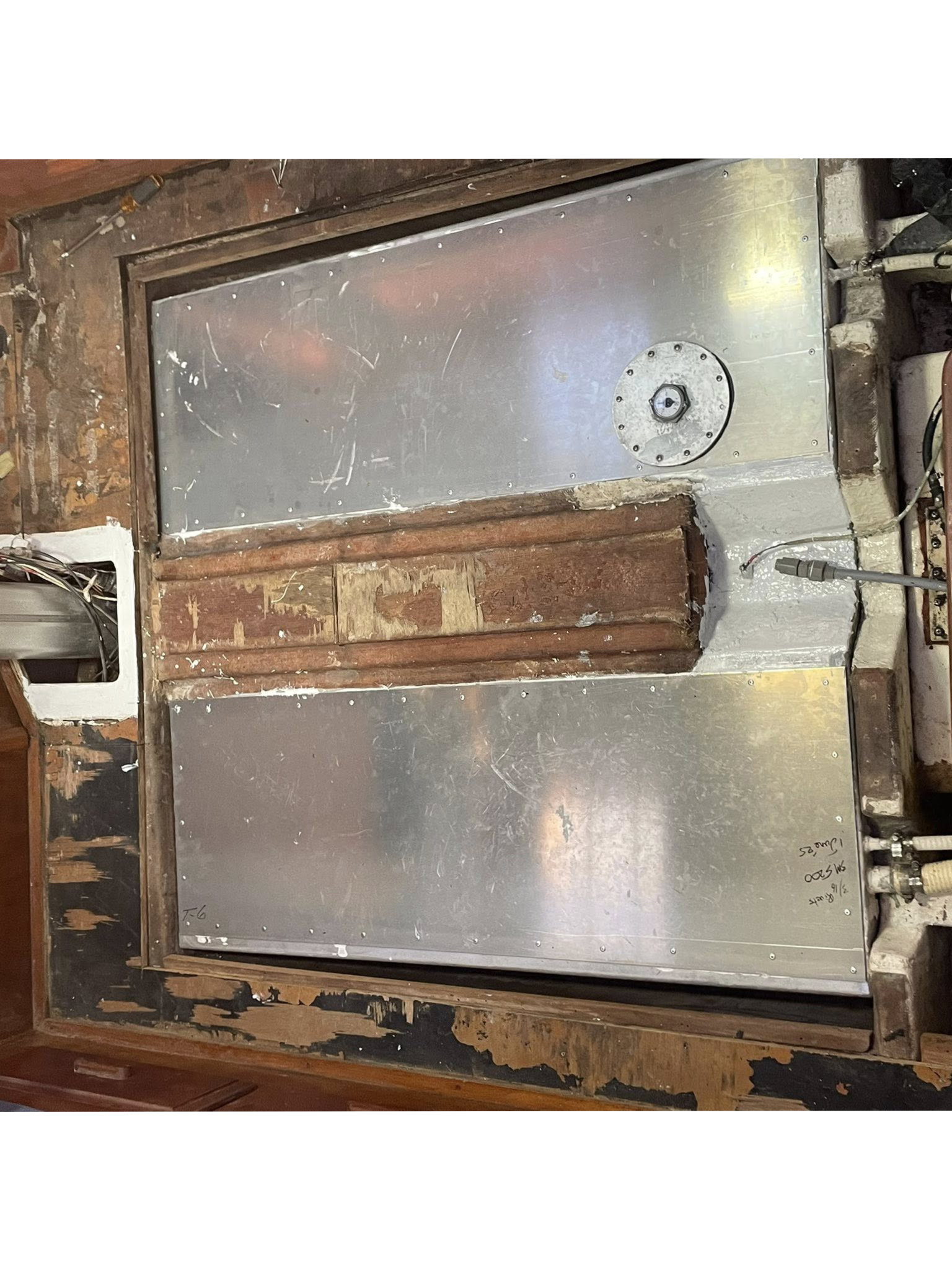
Tanks can often be ticking time bombs in the sense that they are all prone to leaks. For most boats it’s not a matter of if, but when the tank will start to leak.
Most tanks are made of aluminum as this is the most cost-effective material for the builder to use. Some builders will use stainless steel and even ordinary steel for their tanks.
A few builders have used fiberglass for their tanks.
All materials have potential problems with the metal tanks being the most likely to have problems.
Most tanks leak from small pin holes in the metal or at welds. Areas with pitting are often in the hardest parts of the tank to access such as the bottom of the tank.
Once a leak is noted the real problem becomes fixing the leak.
Most tanks are installed early in a boats build process. This often makes it very difficult or nearly impossible to remove a leaking tank.
Although it may be possible to remove a tank either as a whole or cut up, the whole process can be very labor intensive and expensive. Often major parts of the boat would need to be removed.
It may be possible to repair some tanks in place; however this is not common, most tanks will require removal.
Pay close attention to tanks for any boat you may be interested in. Look for leaks under and around the tank. Do not forget to inspect the top of the tank as a surprising number of leaks occur on the top of the tank. This is because dirt and moisture accumulate on the top of the tank causing corrosion. When on the top of the tank the leak may only be noticed when the boat is underway with the tank full.
Older boats that have had the tanks replaced have a higher value as this would be one less future potential problem.
3. Keels and Bolts
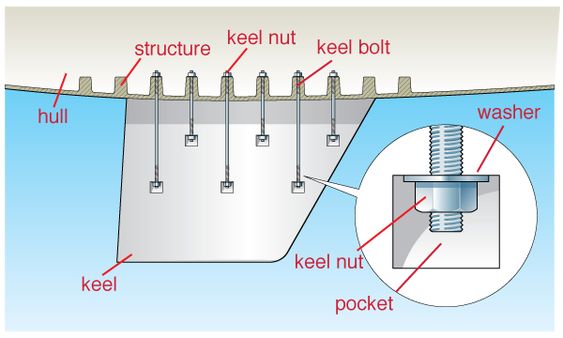
For boats with bolt on keels the bolts securing the keels are critical.
This is an area that can be very hard to fully evaluate because it is impossible to fully access the bolts without removing the keel, which of course is something the seller is not going to let you do.
There can be clues however that will indicate whether there may be hidden problems.
First just observe, look at the condition of the bolt heads or nuts in the bilge. Are they rusted and in poor condition?
Try to clean any dirt and rust from the heads to be able to see their condition better. If they are under bilge water ask the seller to remove the water so you can have a better look. Inspect the fiberglass and surrounding structure for cracks or anything that does not look “right.”
If the boat is out of the water check for rust weeping from the keel joint, also look for gaps in the joint, or other signs of problems.
If the boat is being hauled for below waterline inspection carefully check the keel/hull joint with the weight off the keel. During surveys while the boat was hanging in the lift, I would press my foot against the bottom of the keel while watching the keel joint. If any movement was noticed it was a sign of bigger problems. This happens more often than one would think.
You will also want to inspect the forward edge and bottom of the keel for any signs of damage or repairs. This could indicate past hard groundings.
For encapsulated keels check the leading edge and bottom of the keel for damage or repairs.
Look at the sides of the keel for signs of swelling or cracks in the fiberglass.
Tab the sides of the keel and note any possible voids.
Also inspect the hull at the forward end of the keel as this area has been known to have delamination due to stress from the keel pulling down on the hull.
Most encapsulated keels used lead or lead punching’s for weight but some used iron. Iron will expand when rusting so look carefully for swelling on the sides if you think iron was used.
2. Engine Issues
When doing a survey one of the areas I always check first is the engine compartment.
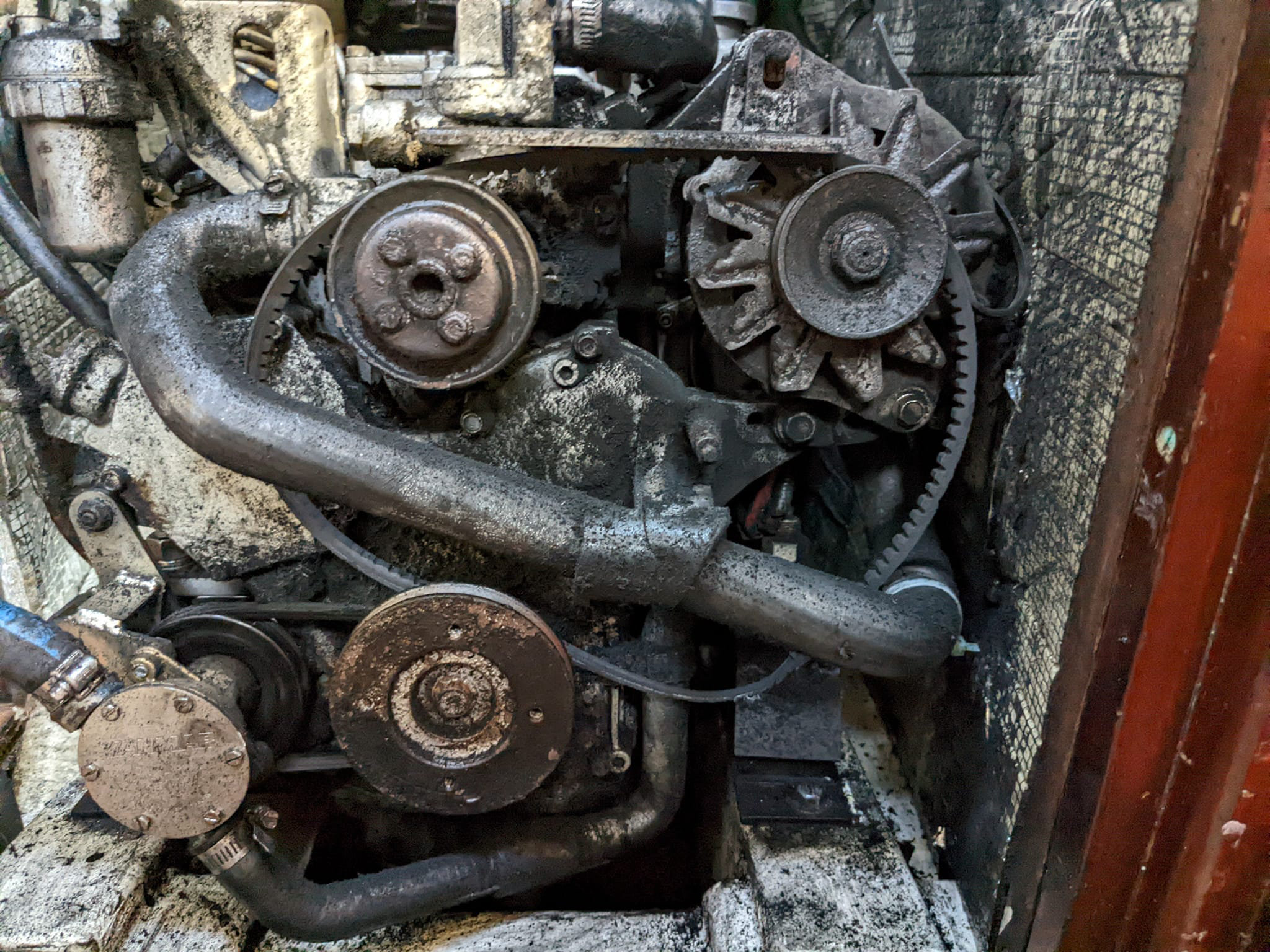
The general condition of the engine compartment will give the best clues about how well an engine has been maintained.
If the engine compartment is dirty with oil under the engine and wires hanging all over the place I know that the owner has put little effort into engine maintenance.
I will also check the engine hours and ask to see any service records the owner may have. Lack of service records along with high hours or worse a broken or missing hour meter can be another clue as to how the engine has been maintained.
Most small marine diesels will last many hours if cared for, but lack of proper maintenance will shorten the life of the motor.
I try to always do a cold start with a full sea trial, running engine for at least thirty to forty-five minutes at varying RPMS. I also will note how the transmission sounds when shifting.
Oil analysis is helpful and not very expensive. Samples are easy to take but be sure to only take samples after the engine has been run long enough to come up to full operating temperature. The results can sometimes be a bit confusing, but they will reveal any major issues.
If anything does not look or sound right have a mechanic take a closer look.
Don’t forget to carefully inspect the systems connected to the motor.
Many issues with motors can be traced to subsystems such as fuel, exhaust and water systems.
If in doubt have a qualified mechanic check the motor.
1. Bad core, Delam, Structural.
The single biggest reason buyers walk away from a purchase is because of structural issues.
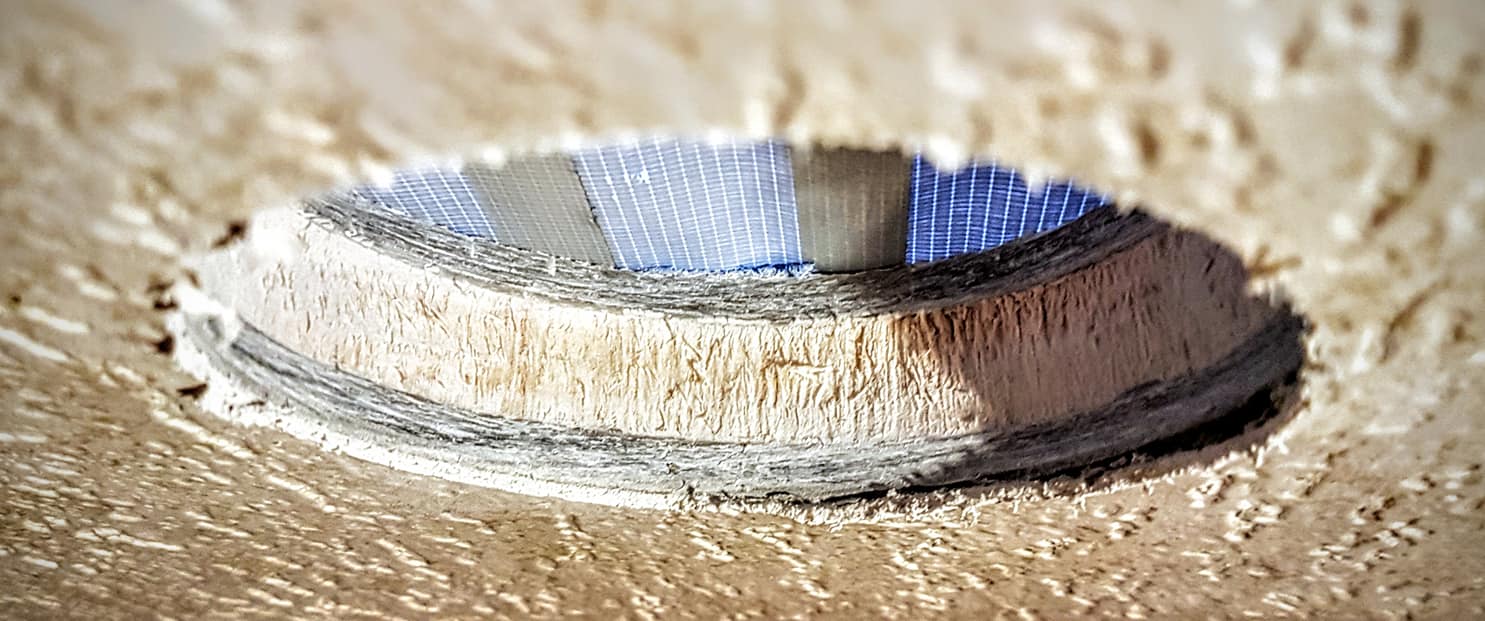
This most often is in the form of soft deck coring. When first boarding a boat I will do a slow walk around the decks. I can often tell right off if there is an issue, things will often just not feel right under foot.
Although the true check only comes with a moisture meter and a good tap out this can be a good way to get a “feel” for possible issues.
Soft coring is most often the result of water intrusion that results in the core rotting.
There can also be cases of the core being wet with the core material still being solid. Wet laminates are not good and will lead to bigger problems over time.
Although not as common, delamination does happen and is usually the result of a collision of some sort, a hard impact to the laminate that has flexed the laminate to the point the resin is no longer solid, The laminates may also have separated.
Other structural issues can include released secondary bonding of frames, bulkheads and other major components.
This is often caused by hard impacts to the structure such as a hard grounding. It can also be the result of excessive flexing of the hull and structure.
Rotting or damage to a major bulkhead can also compromise the vessels’ structure. Although almost any structural issue can be repaired it usually is not something most buyers want to deal with.
These types of repairs can be hard to fully estimate the cost to repair, so the buyer would be taking a risk with an allowance on the purchase price from the seller.
The seller may agree to make repairs, but they are most likely to make the minimum repairs needed as they are after all losing money.
If you do decide to have the seller make repairs, be sure to have an independent expert review the repairs as they proceed and not just once completed.
For most buyers’ structural issues are simply too much and find it is better to move on and find other boat.
Ending
If you are thinking of purchasing a used sailboat these are the items that I have found cause most deals to go south and cause the buyer to back out.
With that in mind when looking for boats to buy pay particular attention to these areas before getting too deep into a purchase that may not go as planned. Finding the big issues first will save time and money.
A good surveyor should help in finding major issues but knowing what to look for can help save the expense of hiring a professional.