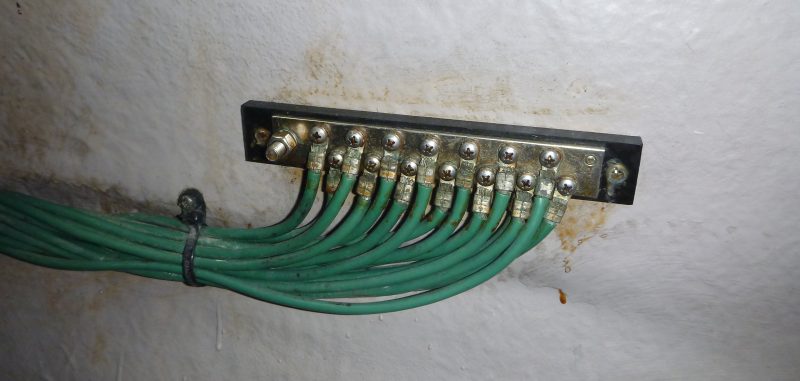

Lately, I have been getting a lot of questions about bonding systems. Most of these questions come from folks who do not really understand what a bonding system is and how it works. With that in mind, I decided to do a sort of beginner’s guide to understanding just what a bonding system is and how it works.
This is one of those subjects that seems to have just as much misinformation as it does valid information. Follow any internet thread online about bonding, and you will find as many “experts” and opinions as you will find facts. With this in mind, I thought I would try to simplify the subject for a better understanding of what bonding is and why you may or may not want your boat’s underwater metals bonded.
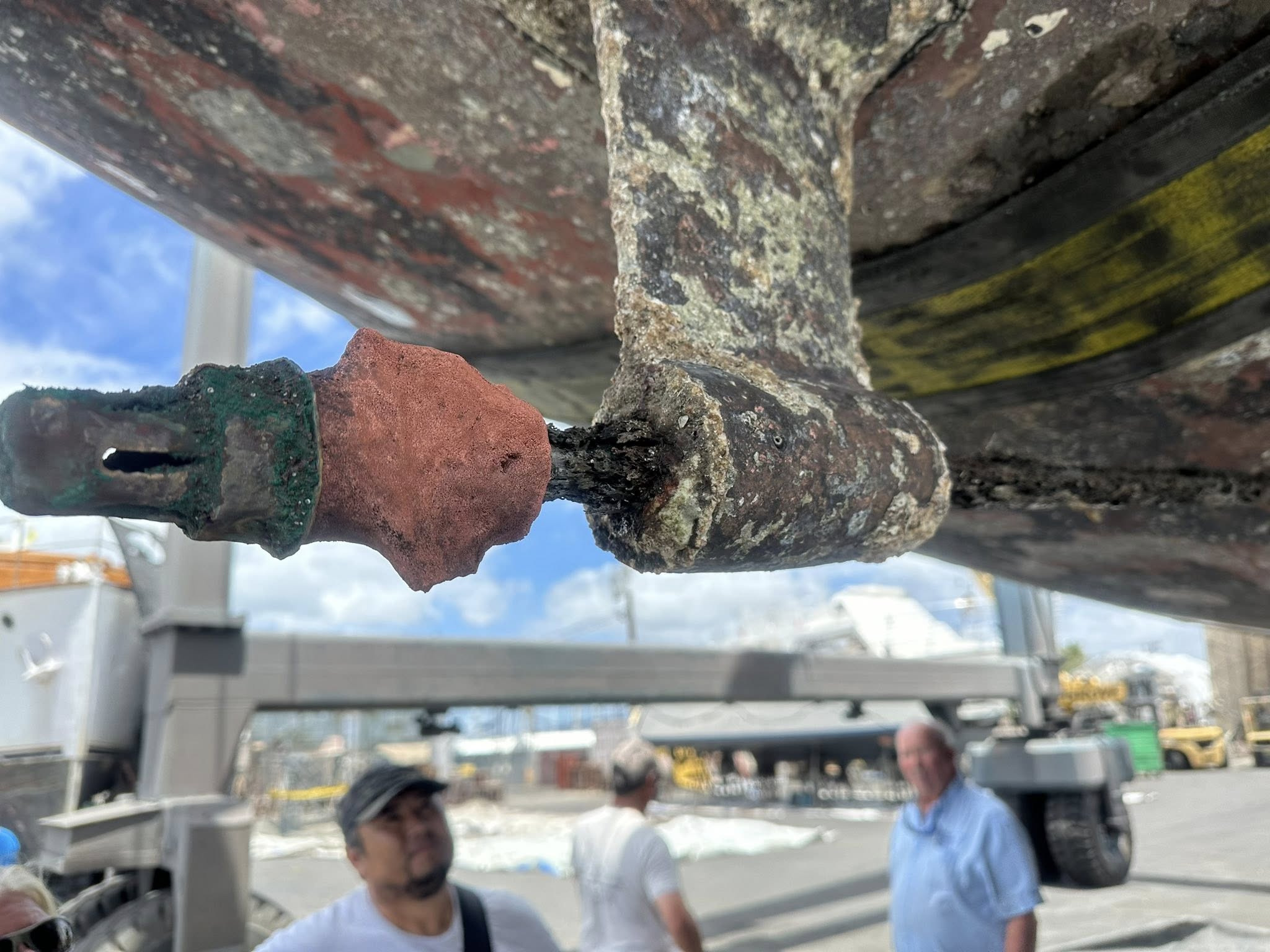
Some confusion comes from misunderstanding the difference between a bonding system and a grounding system. They are two different systems, and although they share some things in common, they are not the same and need to be treated as separate systems, even though at some point they are likely connected together.
I am purposely going to avoid a lot of technical terms and jargon in an effort to keep things simple. I encourage anyone with more curiosity about this subject to do some research and learn more. Just keep in mind it can be a bit of a rabbit hole, and separating fact from opinion can be a challenge.
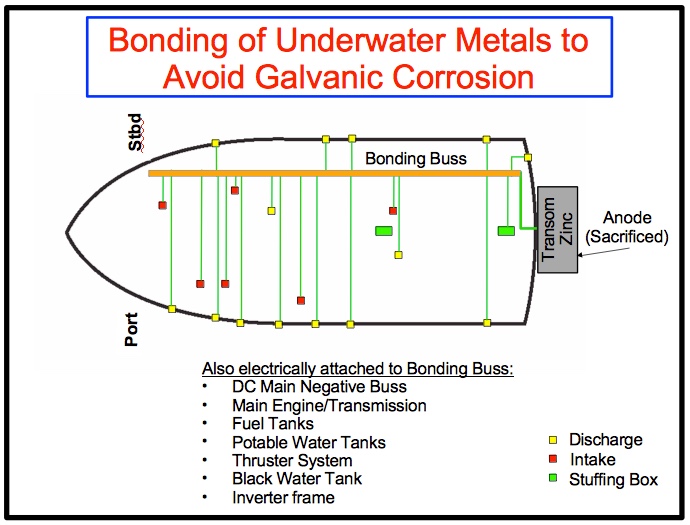
Let’s start with what a bonding system is before moving on to why we bond boats to start with. A bonding system is simply connecting all the underwater metal parts together electrically. This is accomplished with a wire or copper strap connecting all the thru-hulls and other underwater metals electrically together. This electrical connection must be low resistance to properly work, that is why a heavy number 8 or 6 wire is used on most bonding systems. The “low resistance” part is key to understanding how a bonding system works and, more importantly, how and why it fails.
So why would anyone want to connect all their underwater metal electrically together? Good question, this is done primarily to stop corrosion caused by electric current moving from one piece of metal to another.
Nature always seeks balance, and this applies to electricity and metals as well. As most know, metals comprise atoms; each atom of metal is surrounded by electrons. Different types of metals have a different number of electrons zipping around their atoms. These electrons want to balance out with the electrons in other metals nearby. Not all metals have the same electrical potential or electrons as other metals; this is why some metals will lose electrons and others gain them.
You will hear terms such as anode and cathode to describe how one metal will want to give up electrons and another will want to accept them. A metal such as zinc is an anode that is happy to give up electrons. This is why you often hear zincs on boats being referred to as anodes.
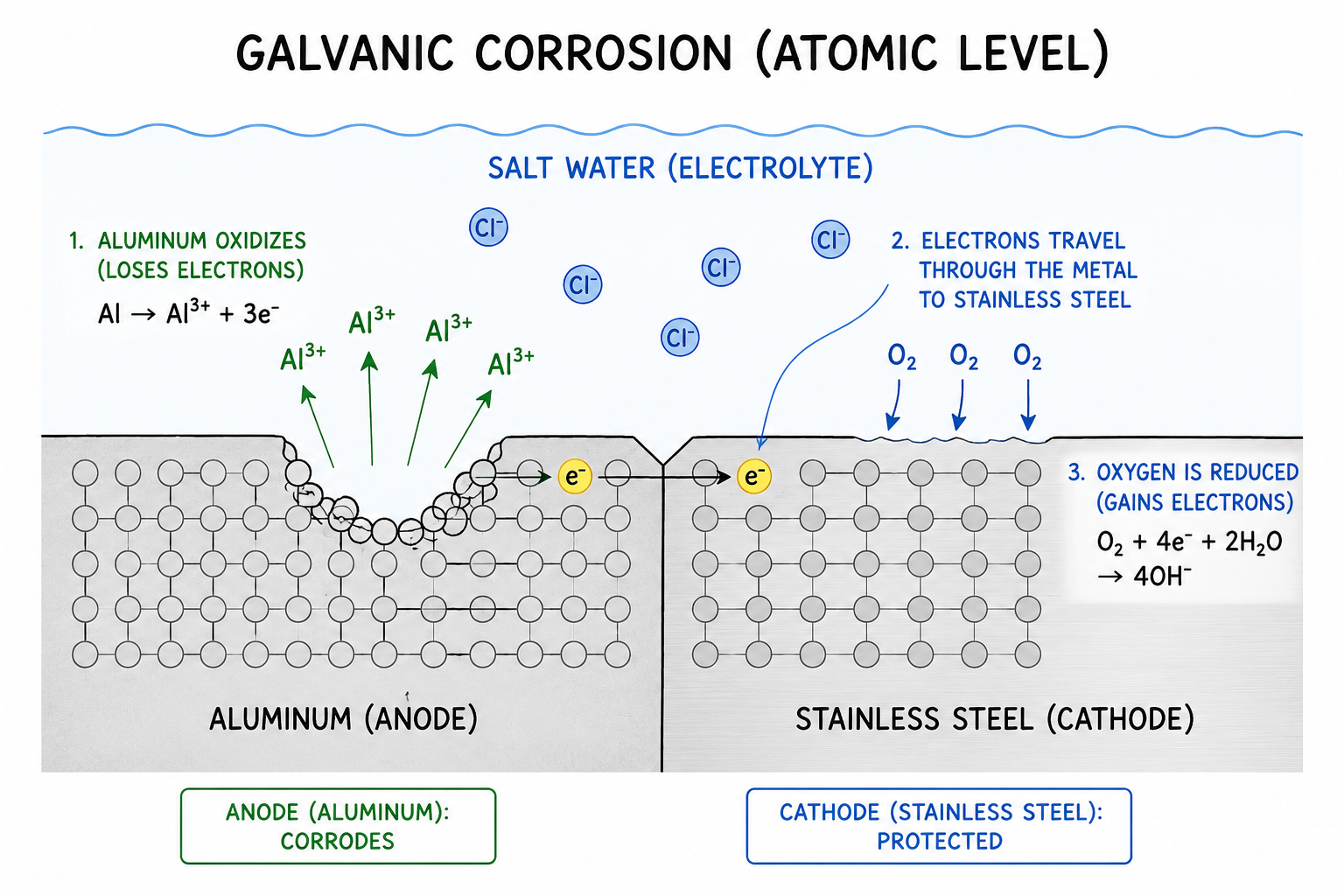
Normally, when two different metals are placed close to each other in open air, nothing happens, as there is too much electrical resistance in the air to allow electrons to flow from one metal to the other. Place these same two metals into a solution such as salt water with less electrical resistance, and the electrons start to flow. In this case the saltwater is called an electrolyte, meaning it conducts electricity. This is why we never use our hair dryers in the bath!
When there is an electrical flow through an electrolyte, atoms from one metal dissolve into solution, break loose and flow with the electrons to another metal depending on proximity; some get lost along the way. This movement of atoms and electrons is what we see as corrosion and is referred to as galvanic corrosion.
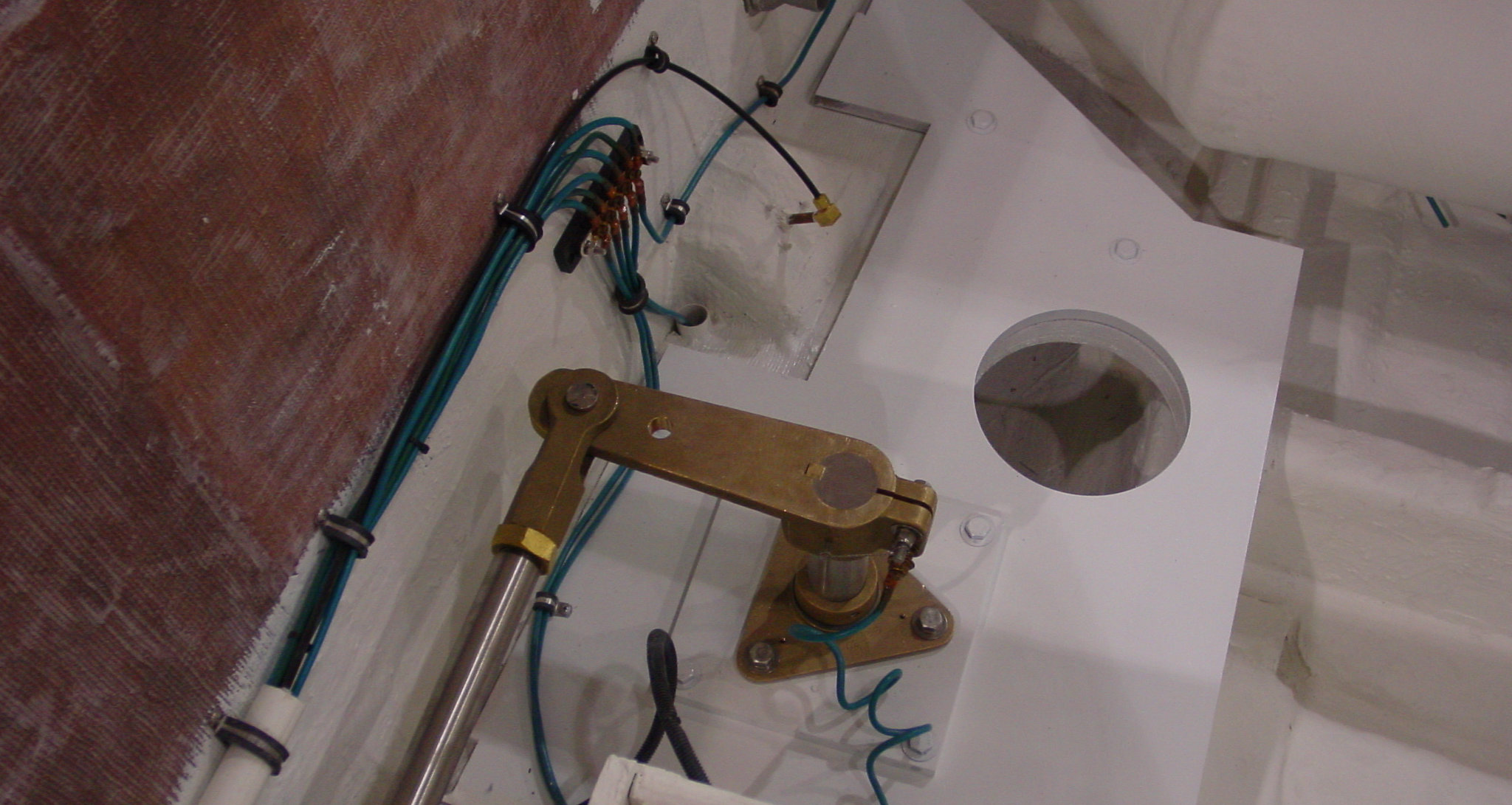
Now, if we attach the two pieces of metal together with a low-resistance electrical path, such as a wire, the electrons can easily flow through the wire. Electricity always seeks the path of least resistance, which is the wire and not the water. With a wire connecting the fittings, electrons simply flow through the wire as a harmless electrical current, rather than causing the metal atoms to dissolve. This is the primary purpose of a bonding system.
It should also be noted that electrons can flow only so far in water as the water itself offers resistance. This means the further apart any metals are in the water, the less likely any current will flow from one fitting to another. This depends partly on the strength of the current flow and the surface areas involved. Normally, any distance of more than a few feet will be enough to stop the flow of electrons for most boat fittings.
The surface area of the metals will also influence how much current will flow. Something like a bronze rudder or propeller will have more surface area than, say, a ¾” thru hull fitting. This is why coating underwater metals with an epoxy coating will help reduce corrosion by reducing the area of exposed metal.
Now, with a basic understanding of what a bonding system is and how it works in theory, let’s look at how it works and more importantly, how it fails to work. Unfortunately, we all know that in boats, theory often gets head-butted by reality! The real problem is maintaining a bonding system and keeping all the connections at low resistance. Making good electrical connections in the bilge is hard enough; maintaining those good connections is even harder. This is why most bonding systems fail in the real world.
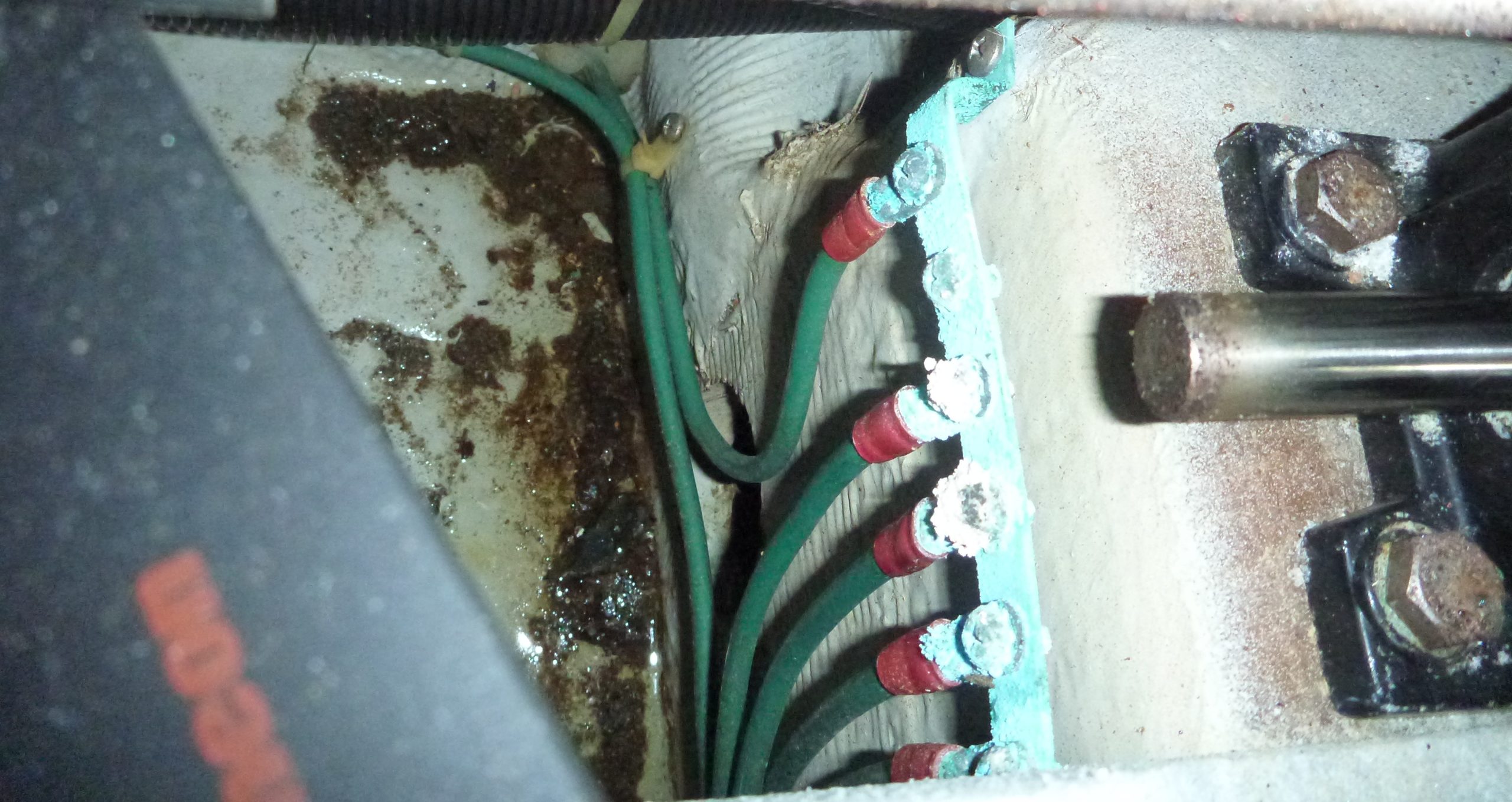
A bonding system, when everything is in good order and there are no poor connections, will indeed protect underwater metals from galvanic corrosion. The problem I have found over the years is that bonding systems are rarely maintained properly. Having been a surveyor who has looked at hundreds of boats, I could probably count on my fingers the number of boats I have inspected that had a good, intact bonding system.
The problem is that almost nobody does anything to check their bonding systems until something goes wrong and they find corrosion on their metal fittings. If a connection is broken or has corrosion, there will be resistance to the flow of electrons, causing the current to flow through the water, which is what we do not want.
When a single fitting becomes disconnected from the system, the entire system becomes out of balance. This could result in the single fitting losing metal. Because of the surface area difference of one fitting verses many, the single fitting could rapidly lose metal, resulting in a failure of the fitting, or as they would say in the space industry, this could result in an “unplanned submersion of the vessel.”
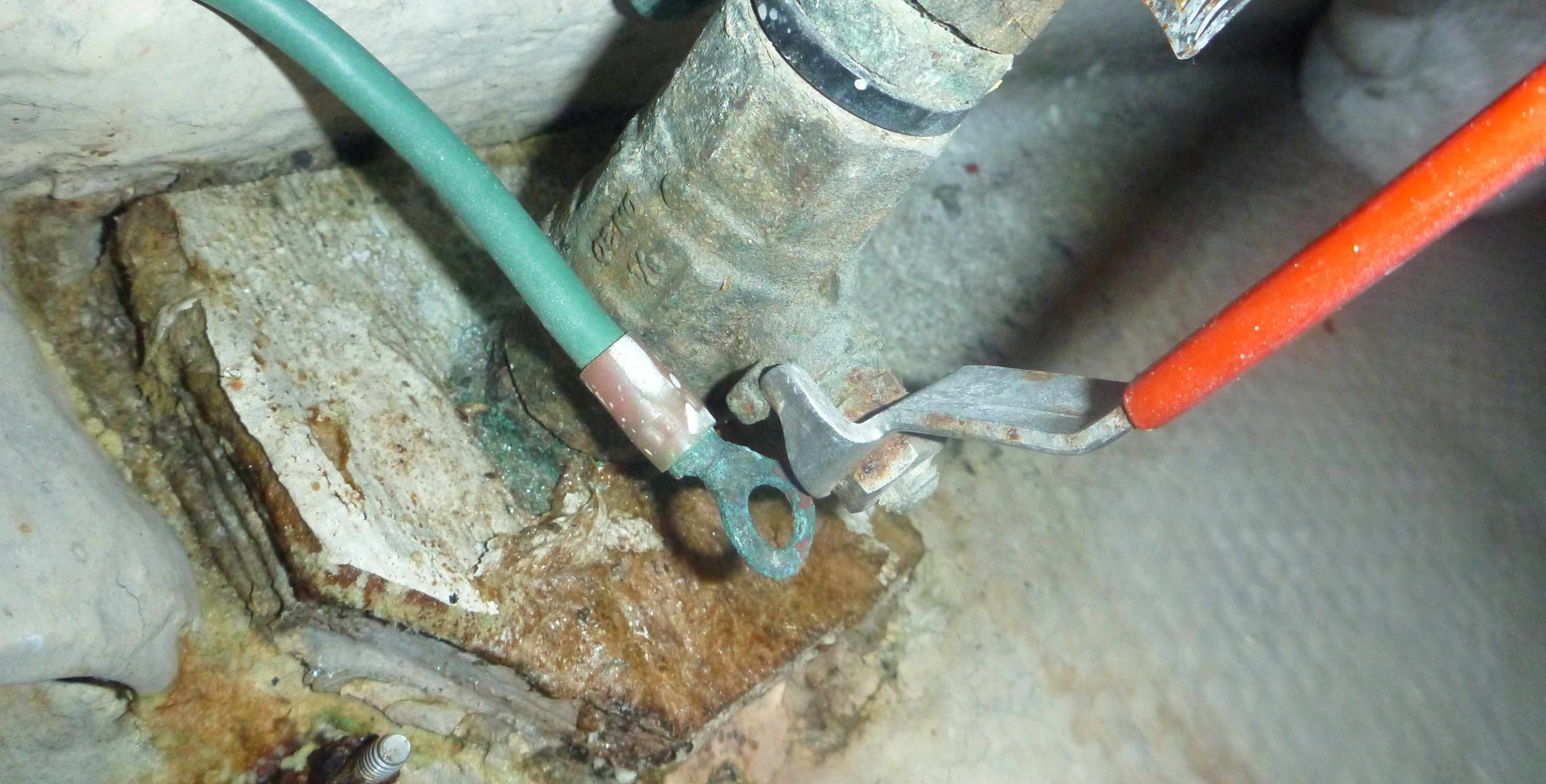
Even if a connection appears intact, it could have high resistance from corrosion at the connection. This is often the biggest problem in a bonding system. It is, after all, hard to prevent an electrical connection from corroding in the bilge of a small boat. As a good bonding system requires low-resistance connections, corrosion in a single connection could throw the entire system out of balance.
The only real way to test a system is with a multimeter checking Ohms resistance, and this really needs to be done with the boat out of the water. If the boat is in the water, the current flowing through the water could throw off the readings. This is not something the average boater is prepared to do.
This all sounds problematic, and in truth, it is. There is another option, though, and that is not having a bonding system at all. As mentioned, the proximity of the underwater metals makes a difference in how electricity can flow from one fitting to another through seawater. If the fittings are far enough apart, the water will have too much resistance, and no current will flow. This would mean there really is no need for bonding most times.
Boats built in Europe are not required to have bonding systems, while those built in the US usually follow ABYC standards, which recommend a bonding system. This just adds to people’s confusion on the subject. I think some of this dates back to wooden boat days, where the wet wood would also carry current. Some will argue that a bonding system can also act as ground, and this is true, but at what cost? Even if acting as a ground, the system would still need to be in good condition with low resistance at each connection in order to be truly effective as a ground.
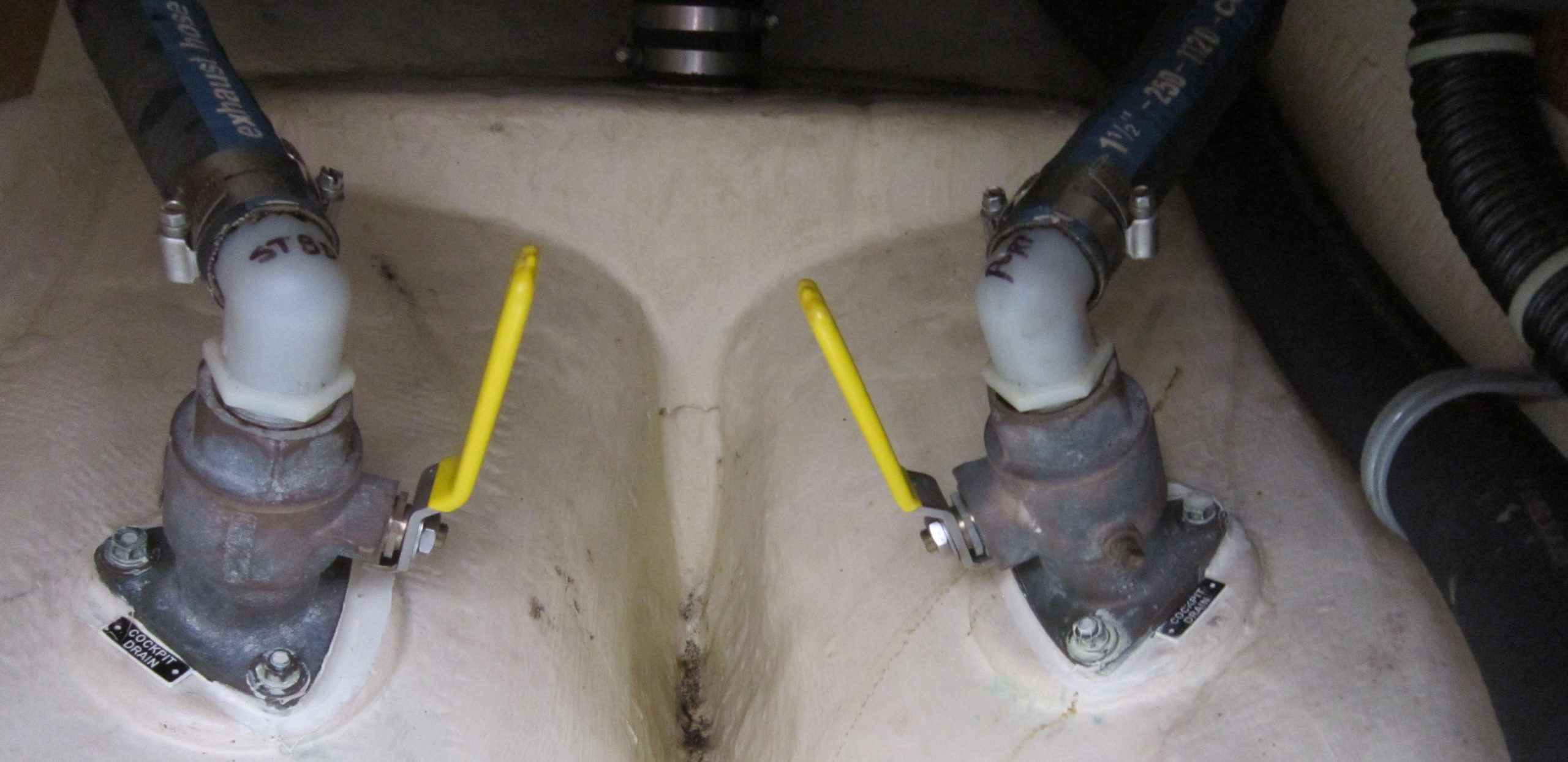
I have inspected boats with bonding systems and without them. I have found that those without a bonding system have had fewer issues with underwater metal corrosion. In fact, those with large, complicated systems, often with zincs hanging over the sides, have more problems. I think this is simply the result of a system that is not maintained properly and, most times, simply too difficult to maintain.
I personally do not bond the underwater fittings on my boat. I also have never had issues with underwater metal corrosion on my own boats. Each boater needs to understand the advantages and disadvantages of a bonding system to know what is best for them.
Galvanic corrosion is not always easy to understand, and understanding the causes is not always obvious. A good start, though, is understanding why all those green wires run all over your bilge. Corrosion can be a problem with or without a bonding system because of many factors. If you have a bonding system, it is important to make sure it is in good condition. Bonding systems should be checked from beginning to end at least annually to make sure all connections are good.
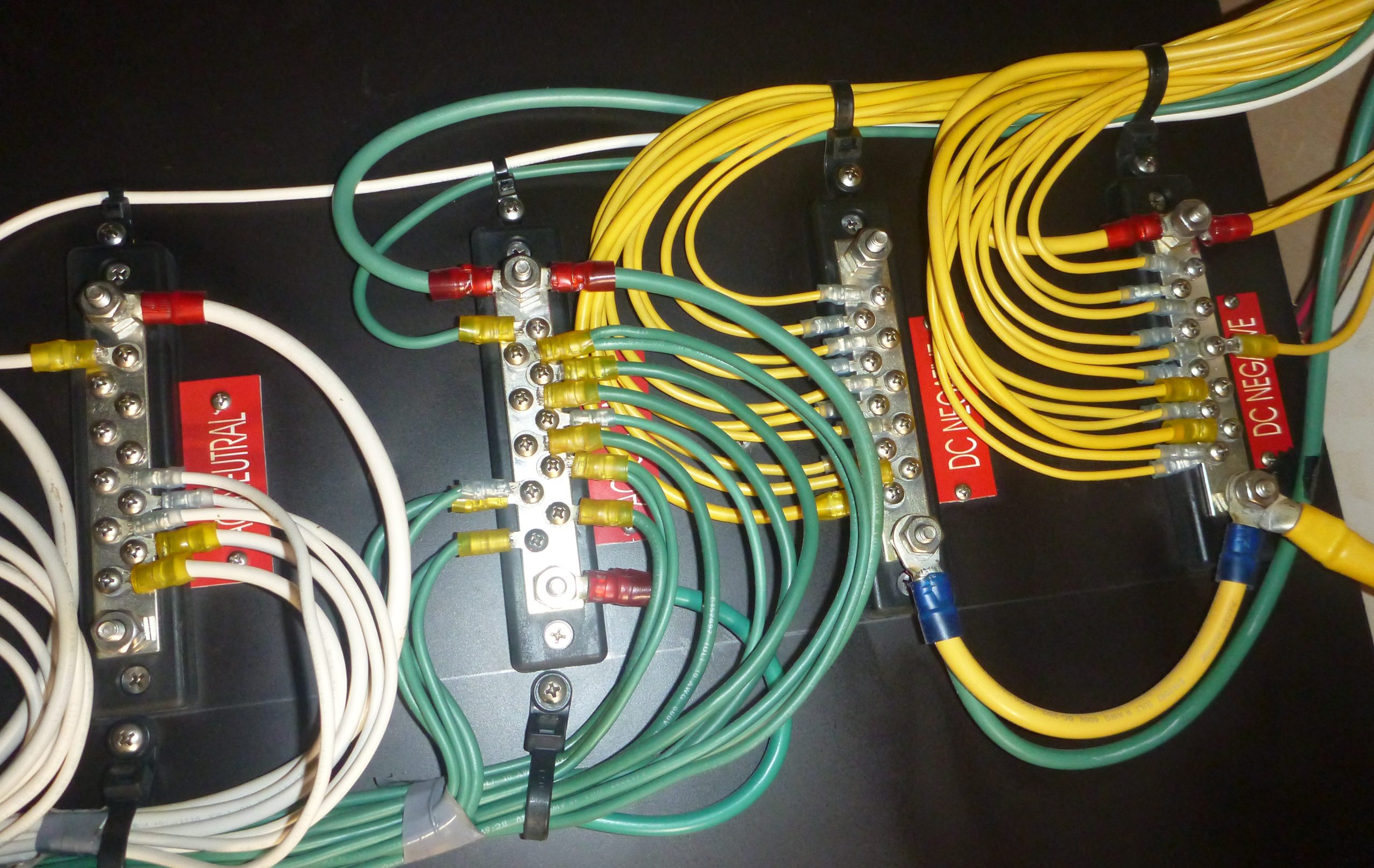
One last note to consider is the vessel’s ground system. Grounds are not the same thing as bonding and are important to the safety of you, your crew, and your vessel. Both the AC and DC electrical systems need a good earth ground. For boats, that means a good electrical connection to the water. This will provide a safe path for any stray currents to ground. Remember, if there is no safe, easy path to ground for a short, that short might try to go through you!
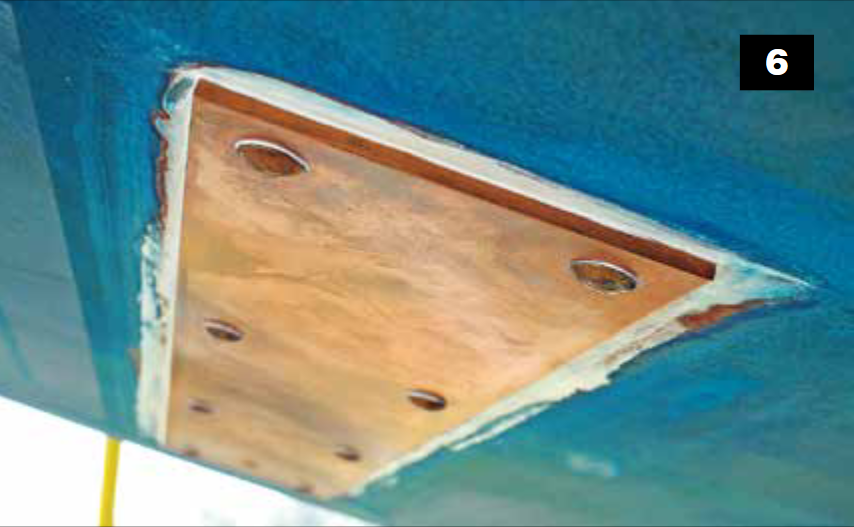
I personally believe it is better to have separate dedicated grounds for the AC and DC electrical systems. This would be a copper plate attached to the bottom of the boat that would act just like a copper rod driven into the ground for land-based electrical systems. This would provide safety without the issues often encountered when connecting safety grounds to a bonding system.
Keep in mind that this article is meant as a very simple explanation of what a bonding system is. Galvanic corrosion and grounding can be a complicated subject, often without simple solutions. Hopefully, the information I have provided will help those with little or no knowledge of the subject gain a better understanding of the basics.
Please let me know if you have questions in the comments section; this way, everyone can join the discussion and learn.