

There are many communication options available for the cruising boat and each has its advantages and disadvantages. Not to hint at the fact I have been around for a long time now, when I started cruising the only communication options were VHF radio and single sideband. Today that list is a bit longer with Cell phones, WiFi and satellite communications now standard on many boats. Each of these has its own benefits and its place aboard a cruising boat but I have found sometimes the old ways are often, if not the best, sometimes the most fun. Many cruising boats have marine single sideband radios which are very similar to amateur or ham radio. Although equipped with these radios many are not getting as much out of them as they could. Using single sideband and amateur radio aboard your boat can add a new dimension to communication, opening up new sources of information and sometimes new friends along the way.
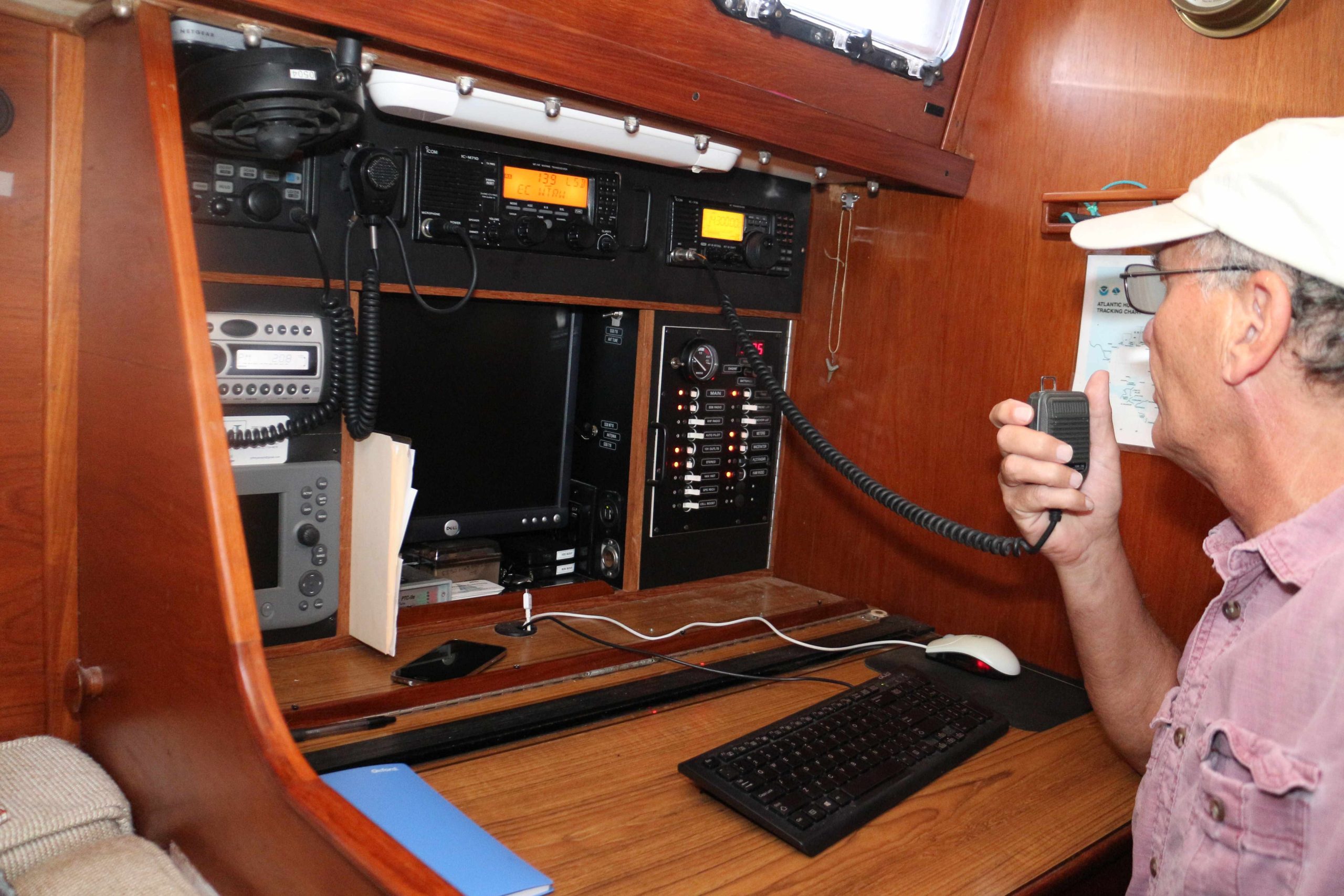
So what is amateur or ham radio? It is a type of AM radio and is very similar to marine single sideband. Amateur radio operates on similar frequencies to marine single sideband however it allows more frequencies to be used making it a lot more versatile. Operating on the AM bands means that with just a relatively small amount output power you are able to communicate long distances, sometimes thousands of miles, making this a good option for cruising boats in far off locations. In fact amateur radio is so similar to marine single sideband that almost all marine units can be “opened up” to amateur bands with just a simple software update.
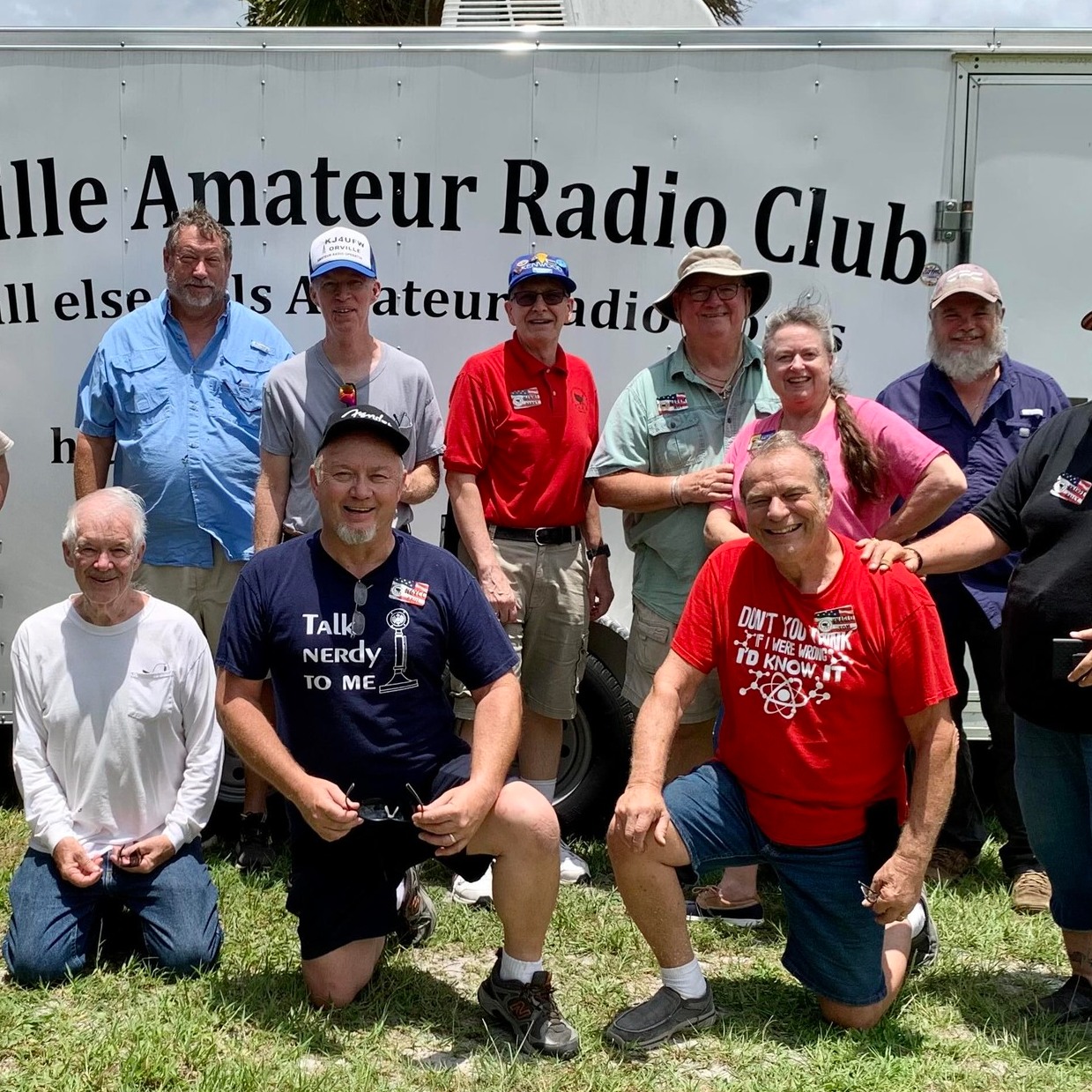
Many cruisers, both power and sail, have found that amateur radio can not only add a new level of safety to their cruising but can also add a new dimension of fun. One of the big differences in radio communication over cell and satellite phones is that radio is open for others to hear and join in on the conversations. Now at first this lack of privacy may seem a bit uncomfortable but in truth it opens a new community to the cruiser in their travels. There are many “nets” or open conversations available to any cruiser who wishes to join in. Information about weather, cruising conditions, and even boat repair is talked about on these radio nets. Many nets have a daily “check in” for voyaging boats on passage adding to the safety factor for these sailors. Most of these nets operate at specified times of the day and are controlled, meaning a volunteer will control who can talk and when.
If you already have a marine single sideband you may be very close to being able to use the amateur frequencies as well. As mentioned most marine units are able to be modified to work as an amateur radio. This modification is usually a simple software mod that can be made by any good marine radio technician. The antenna and antenna tuner remain the same so this can be a very cost effective way to get into amateur radio. If you are starting from scratch it is recommend to install a already opened marine radio as these are simpler to operate and can also be used on the marine bands and frequencies. FCC laws allow users to operate a marine radio on the amateur bands but not the other way around as marine units are required to have tighter tolerances for maintaining frequency during operation.
Many are put off by the complexity, expense, and difficulty of getting set up with amateur radio. The equipment can be pricy and the installation a bit finicky. Add to that the need for a license and many pass up this form of communicating. It is true getting set up for AM radio communications can be a bit daunting it is often worth the effort. It also needs to be kept in mind once set up most amateur radio services are free unlike satellite and cell phones which require a monthly fee to use. To reduce costs there is also the option of purchasing used equipment. For others the thought of having to study Morse code along with electrical and radio theory to get the license is too much. The truth is the license is not that hard to get.
There are three basic levels of amateur radio licenses available in the US. Each level gives the operator more frequencies and privileges when operating an amateur station. The first level is a technician, this is an entry level license with fairly restricted use. The next level is a General class license, this is what most cruisers get. This license opens more frequencies for the operator and is not too difficult to get. Finally there is the Extra class license that requires an even greater level of understanding of theory. This license has 50 questions and you must have passed the previous two tests before you would be allowed to test for this. The Extra class license does open all amateur frequencies to the operator giving you more options.
There is a misconception that the tests needed to get an amateur radio operators license are difficult and will take a lot of study. Some also think they will have to learn Morse code as well as electrical theory. The truth is some study is required but it is not that difficult and worth the effort. Both the Technician and General class licenses only have 35 multiple choice questions to pass and neither require Morse code anymore. You must pass the Technician class test before you can test for the General class. This means you only have two tests with a total 70 questions and no Morse code to be up and running with an amateur station. That is not so bad really, what you learn can also be helpful to understanding the rest of your boats electrical systems so not a bad investment of time really.
Taking the tests is often very simple. The tests are given by local ARRL (American Radio Relay League) groups and are usually given every other week or at least once a month depending on your area. The fee is low and you can take both the Technician and General class tests in the same sitting for the same fee. You must pass the Technician test prior to taking the General class but they can score your test right there and let you know if you can take the next test right away. This can save a few bucks too as you only pay single testing fee. After passing the tests it only takes a week or so to get your call sign allowing you to operate on the air.
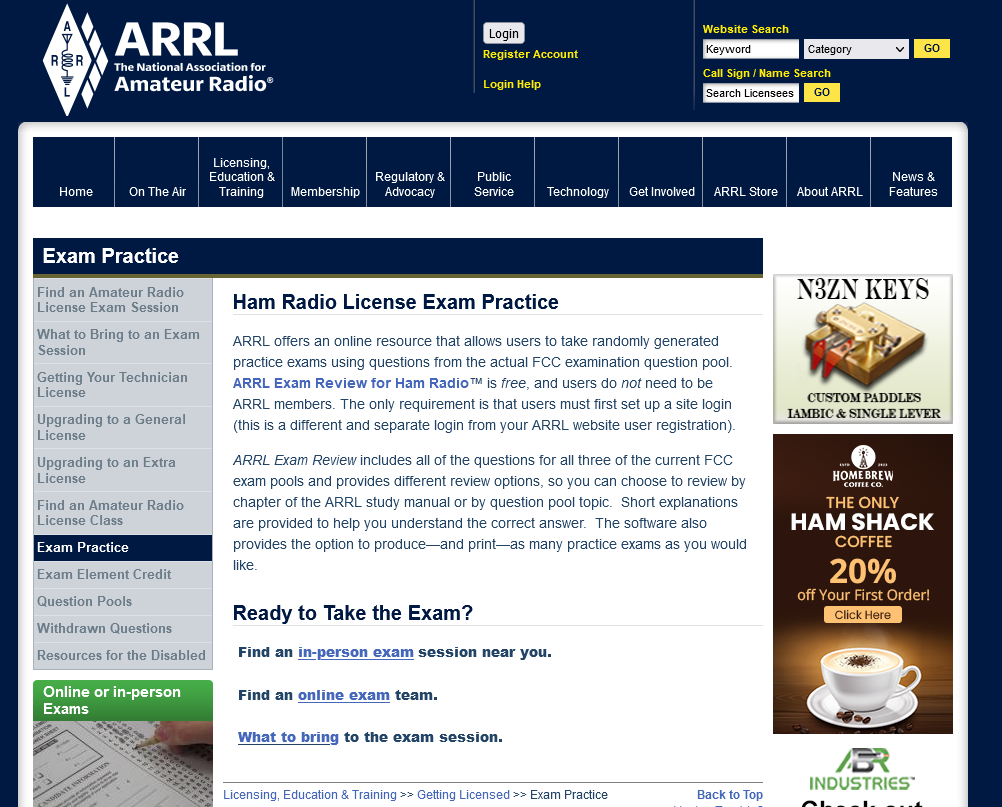
There are many online resources to aid in studying for the tests. Many have sample tests that you can take to help get you ready as well. The ARRL web site has a lot of information on just how to go about the whole process. For most a couple of weeks of study in your spare time is all it takes to get through the tests. For many cruising couples this can be a fun way to prepare for your upcoming voyages.
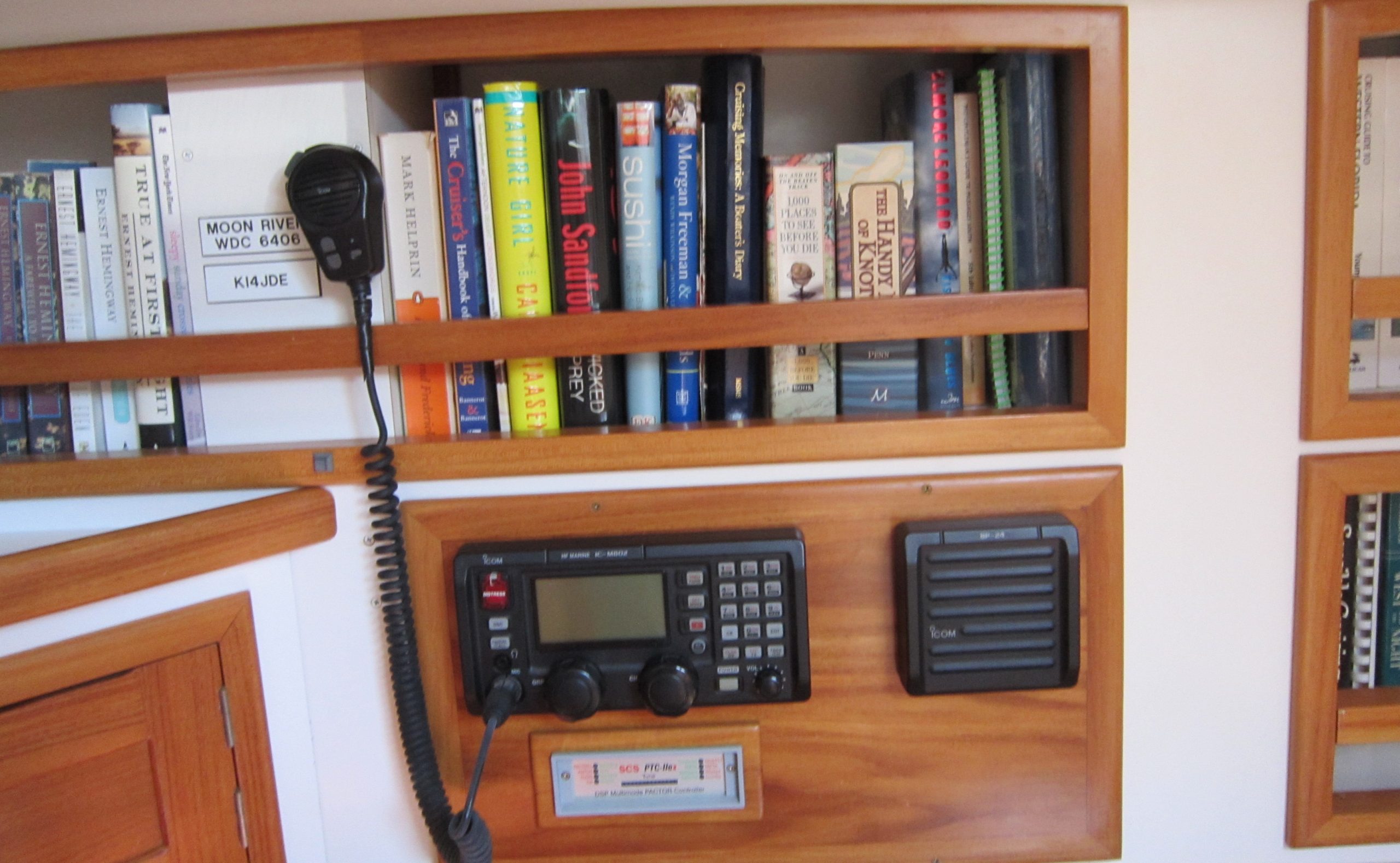
Setting up a station aboard your boat can be as simple as modifying an existing marine SSB unit or a bit more challenging for those starting from scratch. For those with existing SSB unit check to see if it is possible to transmit on an amateur band. To do this you simply tune to a non-marine frequency with no traffic on it and key the mike, if the radio goes into transmit mode you are good to go. If it does not you may need to make a modification to the radio. How difficult this is will depend on the brand and age of the unit. It would be best to consult a local marine radio technician for help with this but some information can be found online as well.
For those starting from scratch I recommend purchasing a marine unit that is already open to the amateur bands. Installing a SSB radio is not quite as easy as installing a VHF radio but it is not as difficult as some would have you believe. There are basically two parts of a good installation, the radio itself and the antenna system. Notice I refer to the antenna as a system rather than a single element. This is because the antenna is perhaps the most import part of the installation and is a bit more the just a pole stuck up on the top of the boat. SSB antennas consist of basically three parts. The first is the antenna itself, next is the antenna tuner, and lastly the antenna ground plane.
All radio signals are waves and different types of radios use different size waves. SSB radio uses bigger waves than FM or TV signals. This means the antenna needs to be longer than your VHF antenna. Twenty three feet is usually the shortest antenna you want to use. This is why many sailboats use a backstay and many powerboats have an extra-large antenna requiring at least two supports. The next part of the antenna system is the tuner. A tuner is required to help make the antenna work on a wide range or radio frequency bands availably. VHF radios and most FM radios use only a few frequencies so the length of the antenna is fixed and there is no need for a tuner. Most marine antenna tuners are automatic and will tune the antenna as soon as the mike is keyed. When you purchase a radio it is best to get a tuner designed to work with that radio this will greatly simplify things. The final part of the antenna system is the ground. The ground is critical to getting effective signals out as part of the signal literally bounces off the ground plane before going out to other stations. Getting a good bounce means getting a good single.

It is beyond the scope of this article to get into all the nuances of antennas and radio installation so I would suggest you find a good technician to help with the installation. Check with your local amateur radio club and other boaters in your are that use marine SSB for advice. I do recommend keeping things as simple as possible and build on the basic installation as your expertise with this type of radio grows. Do not cut corners on wire or wire connection quality as these are critical. When helping trouble shoot problems on other systems I have found it is often the very simple basic things such as using a poor quality antenna cable that can make a system not work at all.
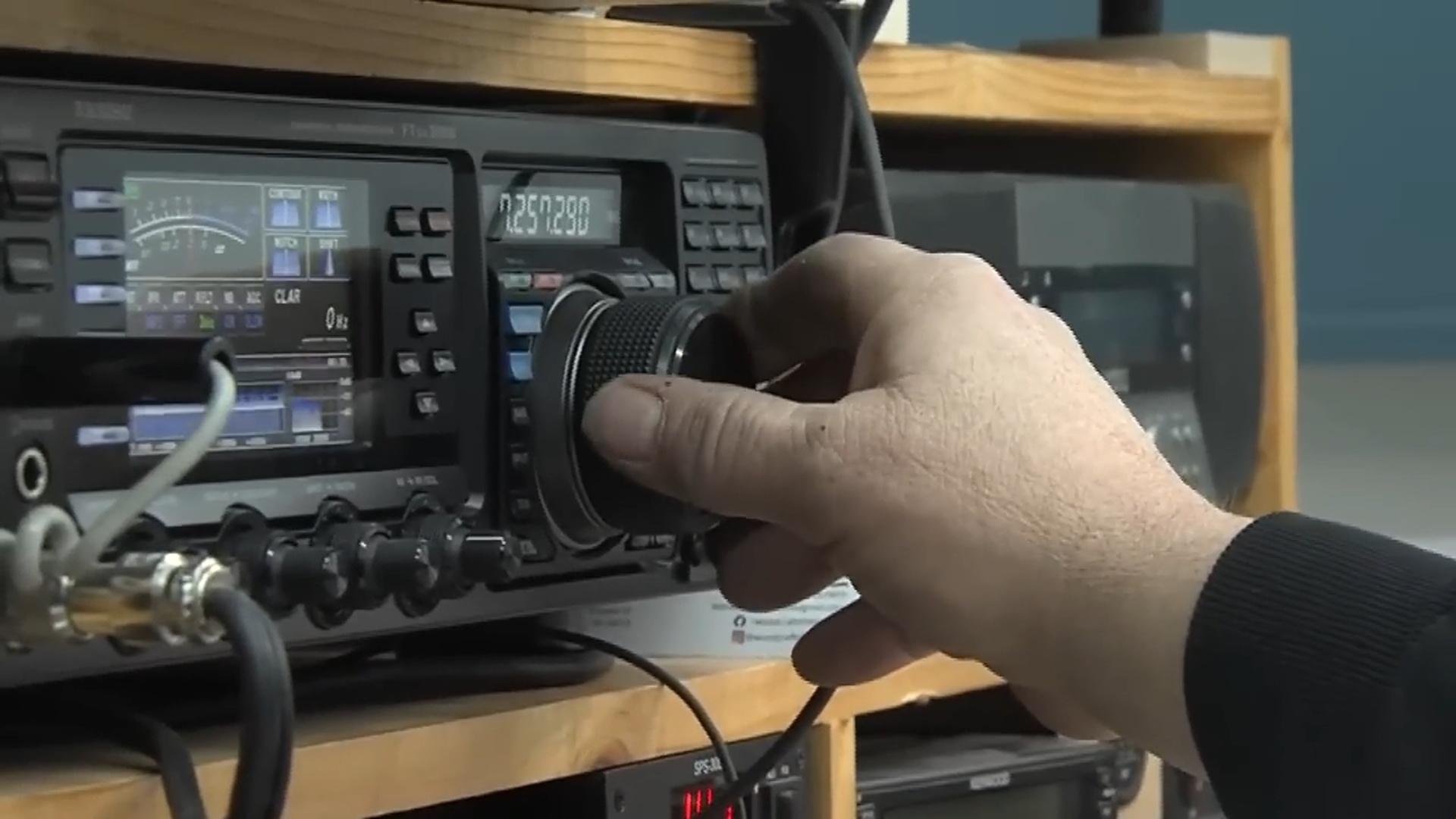
Once you have your radio set up and have passed your tests for your license it is time to explore this new world of amateur radio. For many this means sitting in the marina trying to make contact with someone. This is also the point where many get frustrated and begin to lose interest from the start. The problem is most marinas are very noisy as far as radio signals go. Other boats refrigerators, battery charges, and other equipment leak radio noise, add too that transformers and other equipment in the marina itself and nothing but the strongest signals get through to your radio. Another mistake many make is not knowing who and when to try to talk to other stations. It is at this point many think their installation is poor when in fact it may not be.
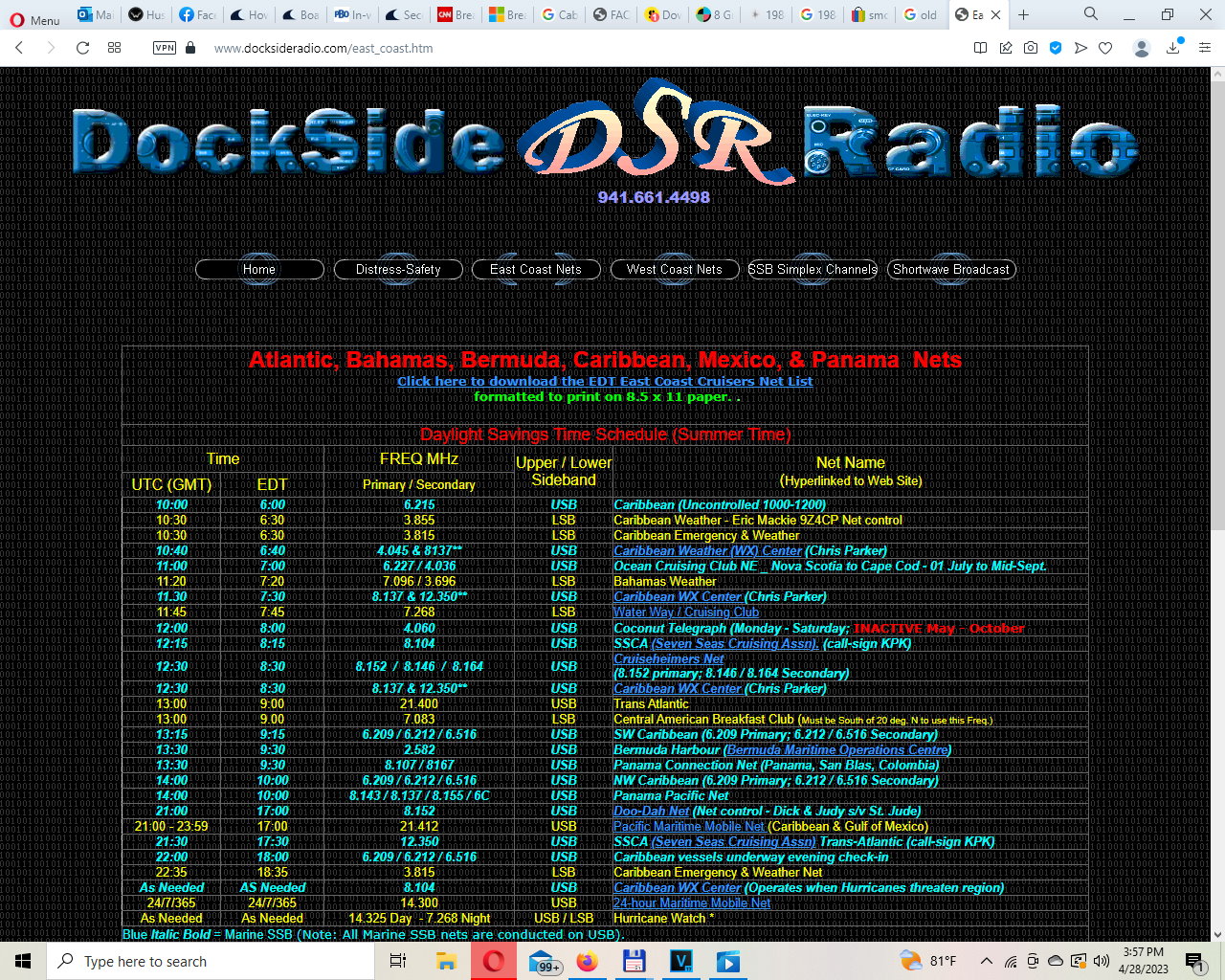
Before getting frustrated it helps to search online for the times and frequencies of marine nets in your area. Try just listening for a bit, pick a few nets to follow and tune in when they are on. If all you can hear is static or strange beeping noises try turning off equipment on your own boat to see if this quiets things down. Inverters, battery chargers, and refrigeration units are among the nosiest things aboard. If this does not help try taking the boat out of the marina and try again. It can be amazing the difference just anchoring out away from all the electrical noise can make. There are also some online groups you can turn to figure out if you have a real problem. Connecting with another amateur radio operator in an online group who you can set up a time to talk to is a good way to test your setup as well. If all else fails try contacting your local amateur radio club for helps. These people love to assist newbies in getting going and will be more than willing to check your setup.
Setting up for amateur radio may seem a bit formidable but it is not as hard as some think. The rewards come when you get to share information and make new friends while cruising the marine nets. These nets vary from location but there will always be one or two within your cruising range. As you begin to listen to and participate in these nets the names of the boats and their crews will start to become familiar and you may even find yourself anchored in the same cove as someone you have been talking to for some time. The information exchanged can also be invaluable. Often the net controllers are land based giving them access to weather and other information that might be hard to get afloat. These net controllers can also be helpful in keeping contact with loved ones at home. More than once I have heard emergency information relayed when someone at home became ill. You can also get real time information about port conditions and other safety matters. There are even weekly tech nets where boaters can discuss repair issues they may be dealing with. Many nets have a open and freeform conversations after the net where they will discuss who caught the biggest fish and what bars have the cheapest beer.
The use of amateur radio aboard your boat can add a new dimension to the cruising experience, adding safety along with a bit of fun in the process. Learning to install and operate the equipment will add to your overall boating electrical knowledge. The expense and learning curve is not as bad as some would say and the rewards many.