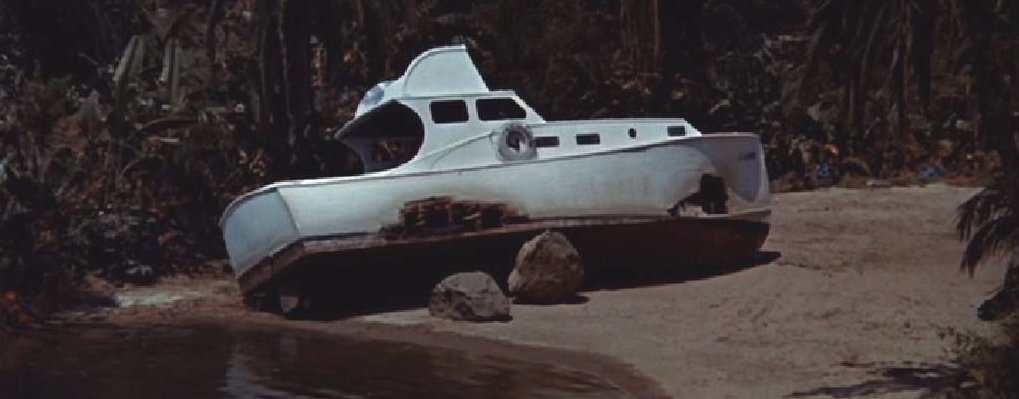
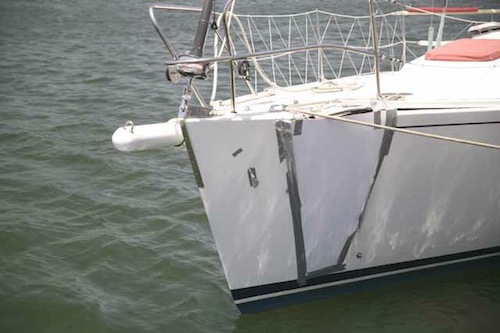
Guerilla boat repair is the art of making things work when you are 200 miles (up wind of course) from the nearest boat yard or marine supply store. Sometimes you just have to channel the MacGyver in yourself to get things done so that you can get your boat and crew back safely to port where real repairs can be made. It may not always be pretty but if it gets you home it’s all good.
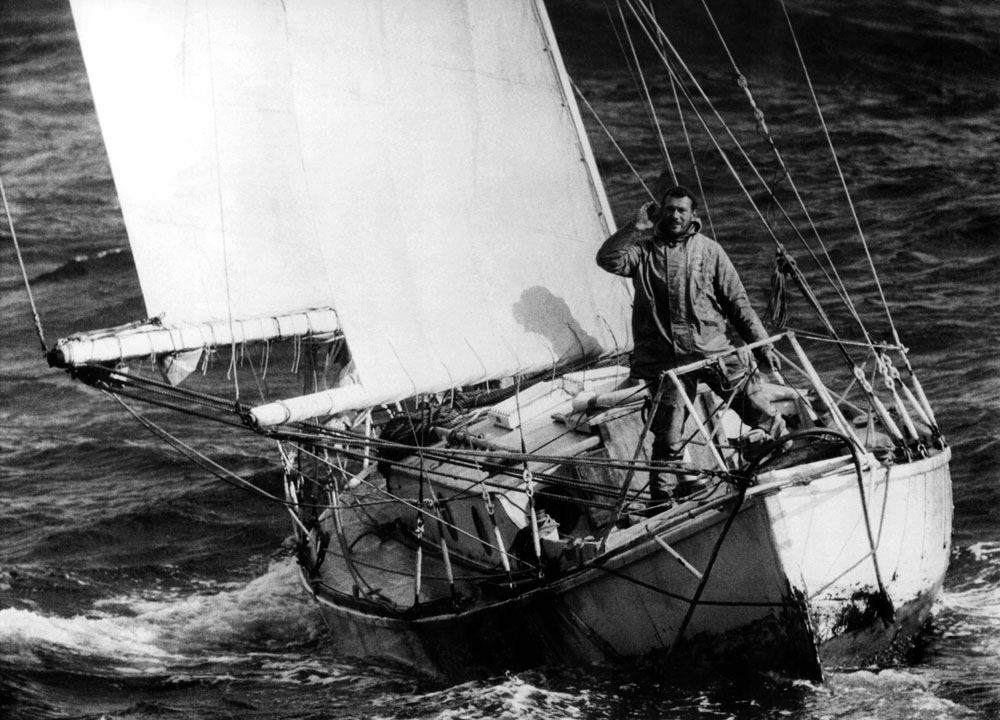
Back when I first started sailing, sailors were knarly old salts who lived for adventure. The likes of Sir Robin Knox Johnson, Bernard Moitessier, and Sir Alec Rose were sailing the oceans in low tech sometimes home built vessels. These men had to rely on their own wits and resources to secede with their legendary voyages. They knew once they left the comfort of the coastal waters they were truly out there on their own. They had to make do using only their own wits and skills along with whatever meager bits and parts they had aboard their craft. Failure was simply not an option and could very likely result in never being seen or heard from again. These were men who knew they were on their own and accepted that challenge. That is after all, part of the sailing adventure, being able to get yourself and your crew safely to the next destination knowing you used your own resources and skills to do just that.
Most of us who cruise away from civilization have had, or will have, our own Apollo 13 moment. That moment when a rudder drops off mid ocean or an engine hose bursts just as you are approaching a tricky inlet. Even something as simple as loosing refrigeration or water pressure when anchored in a far off lagoon can require some creative repairs. Unlike the Apollo 13 crew, most boaters do not have a mission control with a team of engineers to guild them along. We are left to our own devices and resources to figure out how to get things working again. Like the Apollo 13 crew and the rugged explorers ahead of us, we do have what supplies and spares we carry to help us when needed.

For anyone who has dropped their mooring lines and set off for parts unknown it is well understood that things can and do break, most often at the worst times. It is often said “cruising is just boat repair in exotic locations.” Modern boats are complicated pieces of equipment with many systems and working parts that can require repair at the most inopportune times. Knowing how to handle failures and breakdowns is as important as having a good strong boat. No matter what type of sailing you do, crossing oceans or coastal cruising, whether your boat is old or new, at some point it is likely that something will go wrong just when you least expect it.
Guerilla boat repair is part preventative maintenance, part creative repair, and part grit and determination not to be left stranded by any piece of equipment. After all we do set sail to get away from it all and in doing so we inadvertently get away from any help when things do not always work the way they should. Lin and Larry Pardy claim they only once had a minor fitting break during a passage. I am not sure I fully buy this but they do make a point that simple can be better. The fewer gadgets and gizmos we have the fewer things we have that will break. That said, I personally like some of the convince items I carry aboard and plan to keep them even though I know at some point they will indeed cause me some grief. I know I do not possess all the skills needed to fix everything onboard, however I do like to think I can work around most problems I may encounter. Often that is just what you have to do, work around a problem. This is a key concept in most emergency repairs. If you lose your rudder at sea it simply is not possible to fit a new one while under way. You can however find a ways to keep your boat moving in the right direction by working around the problem. Most emergency and field repairs are a bit like sailing up wind, you just have to keep tacking until you get to where you want to be.
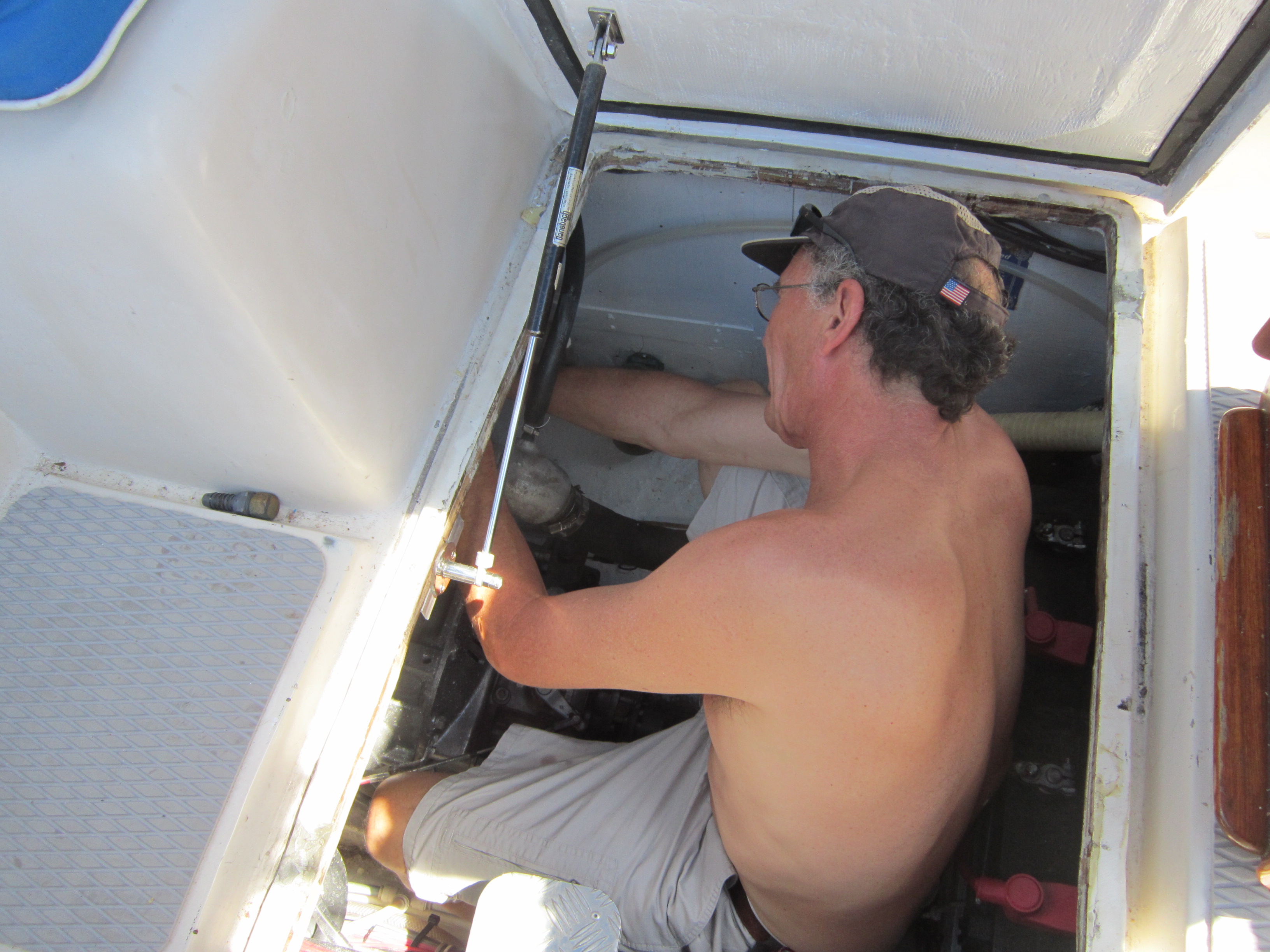
Self reliance is knowing how to work around problems to find a solution that will keep you moving or even just keep the beer cold in that isolated anchorage. That is a big part of the satisfaction of cruising, keeping things working using only your own resources and skills and just maybe some skills you did not know you had. It is also part teamwork as sailors have to rely on each other for help and advice. We may not have a mission control but we do have a community of fellow sailors that possess a surprisingly vast pool of knowledge. It seems this community is always willing to jump in and help with problems large and small. Sailors as a group love a challenge and helping others overcome a challenge is almost as satisfying than solving their own problems. It is a challenge most sailors seem to relish and dare I say it, enjoy.
Guerilla boat repair is all about exploring ways to help you find the MacGyver within yourself. Knowing what bits and pieces you should carry with you and how to use those bits and pieces for both emergency and comfort repairs will give you the confidence needed to set off for parts unknown. No two boats are alike and no two people will do things the same way so there is no single right way to take on any given challenge. There simply is no way to tell anyone how to make every repair they may encounter. It is possible however to share some knowledge and experiences to help plant the seed that will allow you channel the MacGyver within when needed. Most field repairs are a three part process, you need materials to work with, you need tools to work with, and you need the imagination and knowledge to find ways to use those materials and tools to fix problems when they arise.
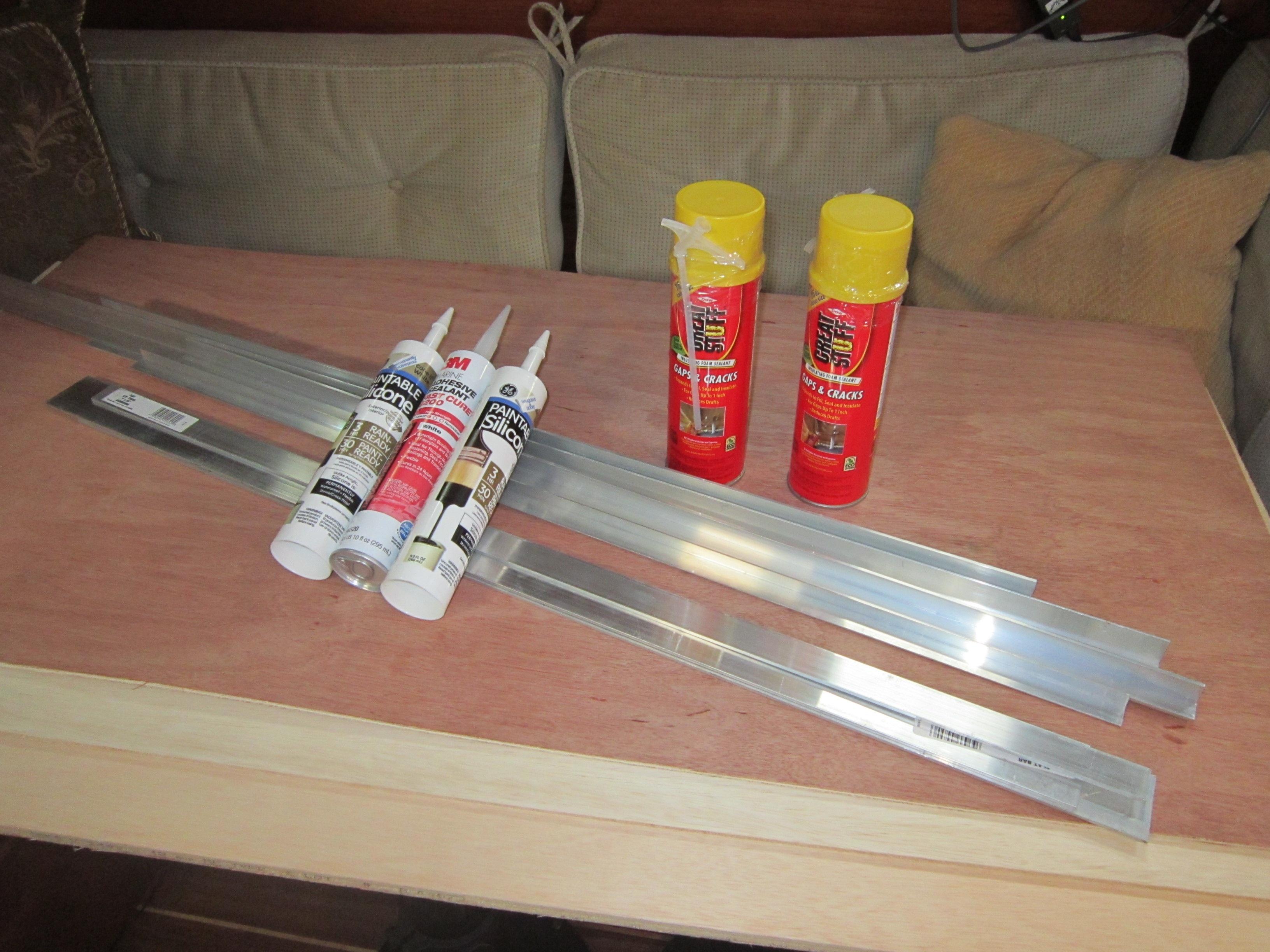
Having the right materials and supplies needed to make repairs is as important as having the right tools and knowledge. It is often a hot topic among sailors as to just what are the right spare parts to carry aboard your boat. Although spare parts are needed very little, if any mention is made of raw materials to go along with those spares. By raw materials I mean things like pieces of plywood, fiberglass materials, fasteners and other basic supplies that may help you create what you may not have. I consider this type of spares to be as important if not more so than having actual spares parts. After all you cannot possible carry spares for everything you have aboard but with the right materials you can often patch things together good enough to keep you going. The old chewing gum and bailing wire approach so to speak may be just what you need to get home. Like I say it does not have to be pretty, it just has to work.
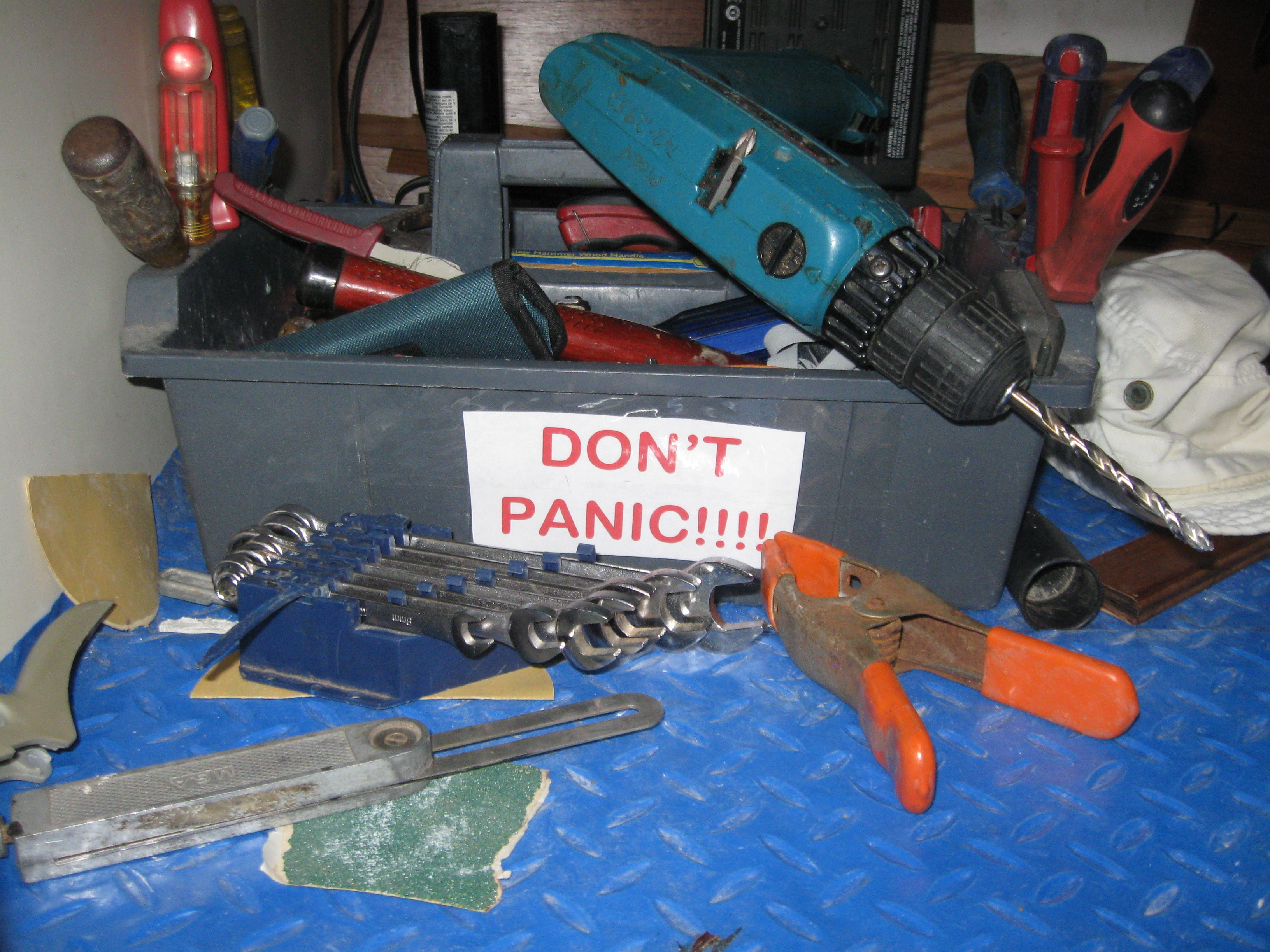
Tools are also a very important part of the self reliance puzzle. Like spares, this is also a subject of lively dockside discussions. Everyone has their favorite tools they feel they cannot live without or are “must haves.” Having spent a lifetime working on boats I know only too well that no matter how many tools you have it always seems you never have that one right tool for the task at hand. I also know that perhaps 10 percent of the tools I have are used at least 90 percent of the time. This can become a bit of a dilemma as we cannot possibly carry a bunch of tools that rarely if ever get used. Often tools can be used in creative ways so having tools that are more multipurpose is more useful than carrying a lot of specialty tools. There are of course a few specialty tools that will be needed and this is particularly true with engine repair tools. There is nothing more frustrating than having the correct spares but not having the tool required to install it. It also needs to be understood that the best tool in the world will be useless without the knowledge of how to use it. With every tool brought onboard you should at least have a basic understanding of its proper use.
You do not necessarily have to be an engineer to be able to effect useful repairs. I have seen some pretty impressive repairs done by those who never thought of themselves as craftsman at all. In fact, some of the most creative repairs I have seen have come from those with little background fixing things. It has been my experience that engineers and those that have a lot of repair knowledge tend to over think things while those with less knowledge are more willing to just try something and hope for the best. It does help to have some basic hands on skills as well as a reasonable understanding of how things work though. The further you plan to sail away from civilization the better understand of your systems you should have. If you are completely without hands on skills there are some very useful trade courses that could help bring these skills up to speed. It is not a matter of being a master at all crafts but rather having a basic understanding of the working of your vessel.
As can been seen Guerilla boat repair is a multi part process where pieces of a puzzle are brought together to find a solution to a problem. Whether the problem is an emergency at sea of simply a matter of keeping the beer cold (many would classify that as a true emergency!) Creative thinking along with having the right tools and supplies can add safety and comfort to your cruising experience. Although seeking outside help is often the best solution, those of us who cruise know this may not always be an option. Being able to find your own solutions and effect even rough repairs is important to the safety of your vessel and its crew. Self reliance requires some creative thinking and the willingness to try whatever it takes to keep things working. It does not have to be pretty it just has to work!
Capt. Wayne
Let’s hear some of your ideas on this, have you your own Guerilla boat repair repair experience? Leave your story in the comments.