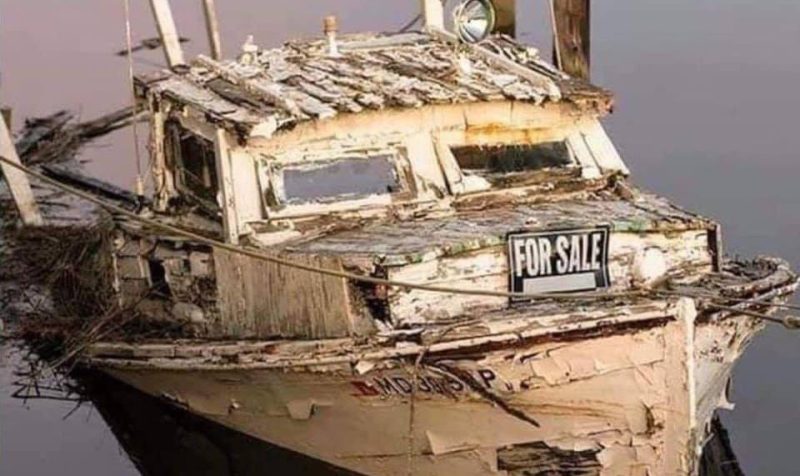

Lately, prices of used sailboats have plummeted, partly due to the number of older boats on the market. This makes the purchase of an old, used sailboat a tempting option for many would-be sailors or cruisers. For less than the price of a decent used car, you can now buy a sailboat that literally could take you anywhere in the world with just a bit of fixing up.
But before pulling out the checkbook with dreams of tropical islands, it helps to have a reality check. Cruising the internet, you will probably find there are lots of opinions about whether a used sailboat is worth getting involved with. Depending on who you listen to, it is either the best thing you can do or the worst, with little middle ground.
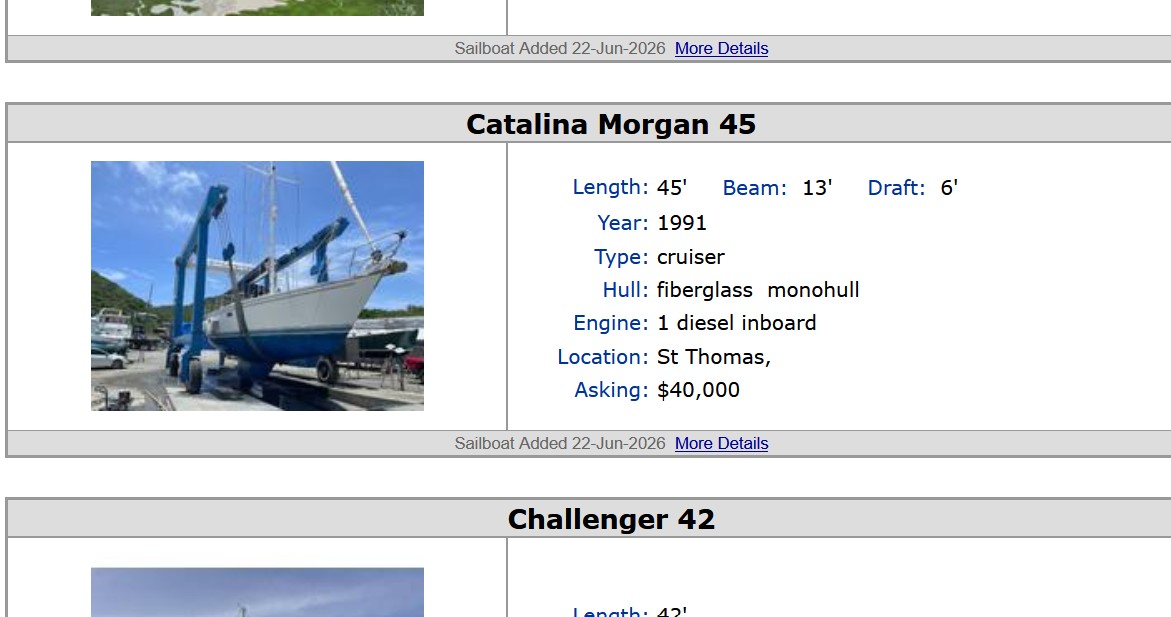
So, I thought as a retired surveyor and long-time cruising sailor who has restored several older boats over the years, I would try to give a realistic look at the pros and cons of buying a cheap older sailboat to fix up and maybe sail away in.
Let’s look at the pros and cons of the most important aspects of purchasing an older used boat and why it may or may not be right for you.
1. Pro. The first pro is obviously the cost. There are many good used sailboats on the market right now, some better than others, but the prices are very attractive in this market. Comparing the cost of a decent older used boat to that of a new one is a no brainer. New or nearly new boats have simply gotten way too pricey for most folks of modest means. For many, buying an older used boat is the only way to afford a boat. Many older used boats can be great deals if the previous owners have done proper maintenance and taken care of the boat. That can’t be said of all used boats, and selecting the right boat is key to taking advantage of the lower prices.
1. Con. Although the cost may be lower, the negative to low cost is most older used boats will require a lot of work. After having restored several older boats, I confess there is some truth to this. The old adage is that there is no such thing as a free boat, and the same can be said for a cheap used boat. Many older boats are going to require many hours of hard work and lots of money thrown at them before they are suitable for long-range cruising. Even a well-cared for older boat will probably require equipment upgrades and cosmetic work. Sails, rigging, and engines are not cheap and can really add to the cost of a used boat if they need replacing.
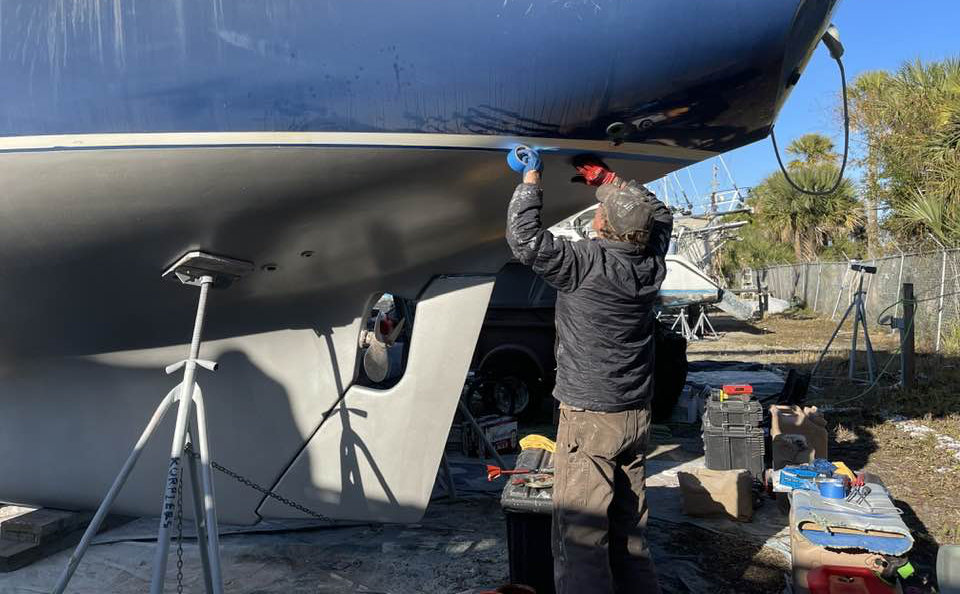
2. Pro. Another financial pro is slower depreciation: Much of the initial depreciation has already happened, especially if the boat is more than a few years old. This means any money and work you put into the boat can help increase its value. It is often possible to get a good deal on an older used boat and be able to increase its value with a bit of effort. This is true if the boat has been purchased from an insurance loss.
2. Con. That said, depending on the boat and how long you own it, you may not see the value increase to match what you must put into it. I always say nobody should buy a boat as an investment. It is very hard to make money on a boat, but it is very easy to lose money. I never go into a boat purchase thinking I will make money in the long run.
3. Pro. Another big financial pro is the ability to control costs. For me, this has been one of the biggest advantages of buying an older used boat. The purchase price is low enough that financing is not needed to buy the boat. This means not being locked into monthly payments. If the boat needs work or new equipment, this can be planned around a budget. For me, being self-employed I could buy new gear and parts when business was good and cut back during slow times. If money got tight, I was not locked into loan payments that might be hard to keep up with.
3. Con. The downside is that although costs can be controlled, it may slow down plans for cruising as it could take a long time to get an older boat ready for cruising. If you are looking to head off to distant shores sooner than later, this could be a major drawback. Doing months or years of work can take the fun out of a boat to the point where sometimes you feel like all you do is work on the boat.
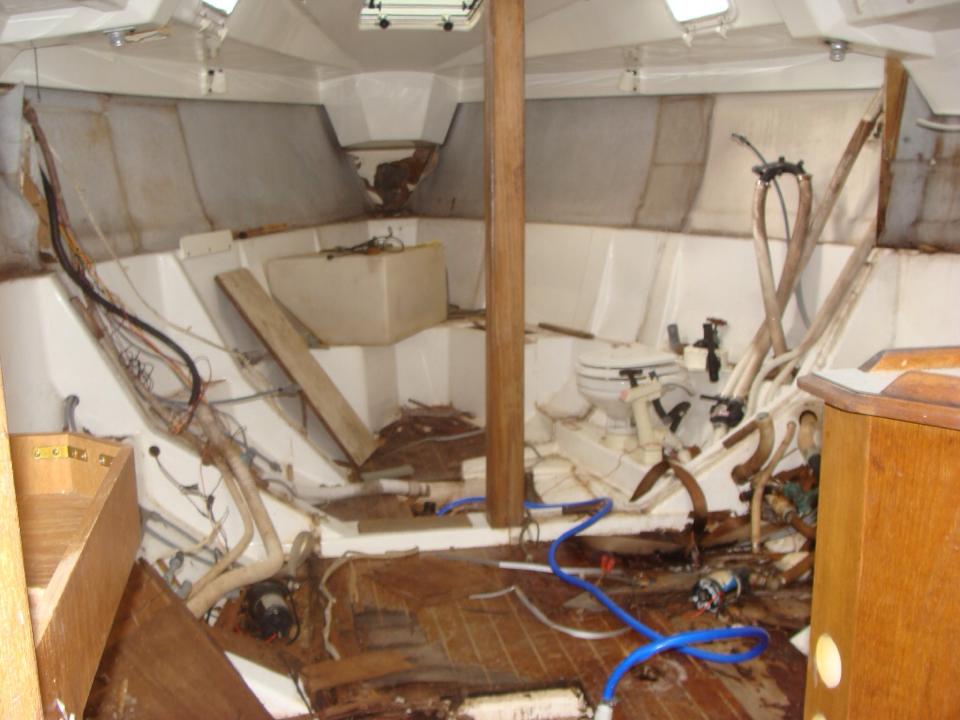
4. Pro. Customization is another positive to consider. If you get a cheaper older boat, you are likely going to do some upgrading of equipment and systems and cosmetic work. First, this might not appear to be positive, but it has some distinct advantages in that you can select the brand and type of equipment that suits your needs rather than just using what the previous owner liked. Electronics on most used boats tend to be dated. But that just means you can upgrade with the brand and model of equipment you prefer, taking advantage of many of the new features of modern electronics. Pumps and other equipment can be replaced with newer, modern gear that will perform better and increase the value of the boat. If sails and rigging are replaced, it can give confidence when sailing in poor conditions; nobody wants to spend a night watch worrying about their rigging. All this adds to the boat’s value.
4. Con. Being able to customize the boat is great, but this of course adds to the cost of the boat. New equipment is not cheap, and it can also take time and effort to do the upgrade. This is time not spent sailing. If you are planning to do some cruising sooner than later, having to fix a boat up will take time away from cruising. Although new electronics are good, keep in mind that this type of equipment loses value fast, and you may not see a return from it when selling.
5. Pro: For many, style and looks are important, newer boats use modern designs that are done more and more by stylists and design teams working to reach a very broad market. Many of the boats built in the 70s,80s, and 90s were designed by naval architects who were designing more for safety and performance over something that looked good in the showroom. Many of today’s boats are better suited to entertaining at the dock than beating into a 25-knot headwind. Today’s boats often lack good sea berths and often have huge open cockpits that are not safe or comfortable when things get lively. Maybe it’s just me as an old sailor, but I also think the older boats looked better with flowing lines that appeared as if they were designed to flow with the waves rather than against them.
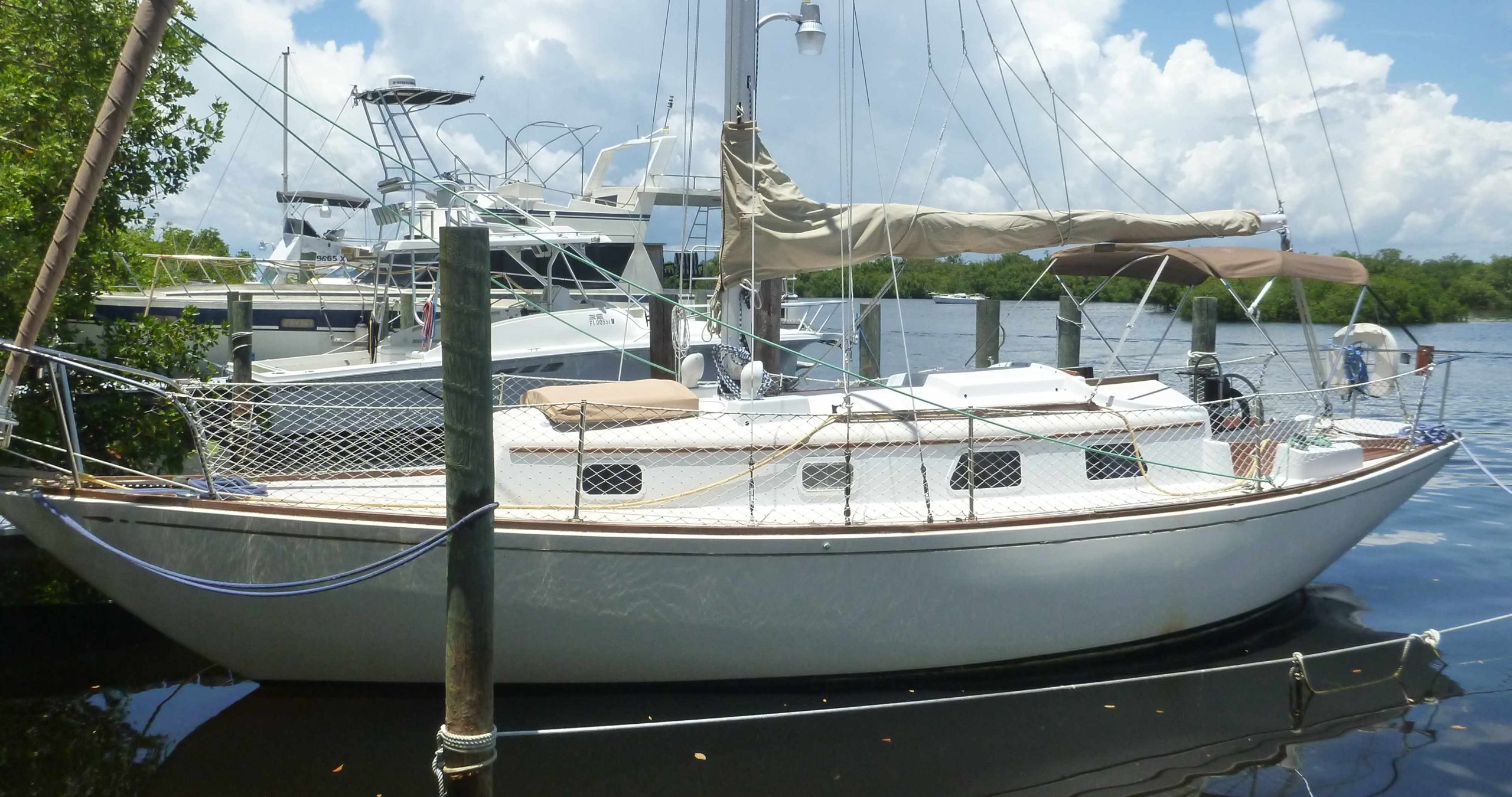
5. Con: On the other hand, older designs often mean less interior space as they were not designed with comfort in mind like newer boats are. Newer boats are lighter and faster with better performance in general. Faster speeds can translate into safety, as it means less time spent offshore exposed to the elements. The flip side of this is that they are not as comfortable offshore. Newer boats often have larger cockpits and roomier cabins that are better for entertaining and traveling with friends. Modern boats are also often easier to sail with self-tailing or electric winches, roller furling mainsails, and control lines leading back to the cockpit. All this makes the older boats less appealing for family cruising. Older boats can be modified with some of these features, but it will add to their cost.
6. Pro: Another pro for older boats is their build quality. I started building boats back in the early 70s when we did not have computers telling us how light we could make everything. Back in those days, the general rule of thumb was to just add more glass until it “felt” heavy enough. Builders took pride in building boats that could take whatever the ocean could throw at them. Boats like Westsail were considered the standard for well-built, heavy ocean-going boats. Even the lower-end production boats were built heavier than they needed to be. Fiberglass and resin were cheap, so it did not hurt to add another layer or two. Today’s boats, although well engineered, are lightly built for speed and cost reduction, not seaworthiness. The interiors also lack the warmth and feel of the older, hand-built teak interiors.
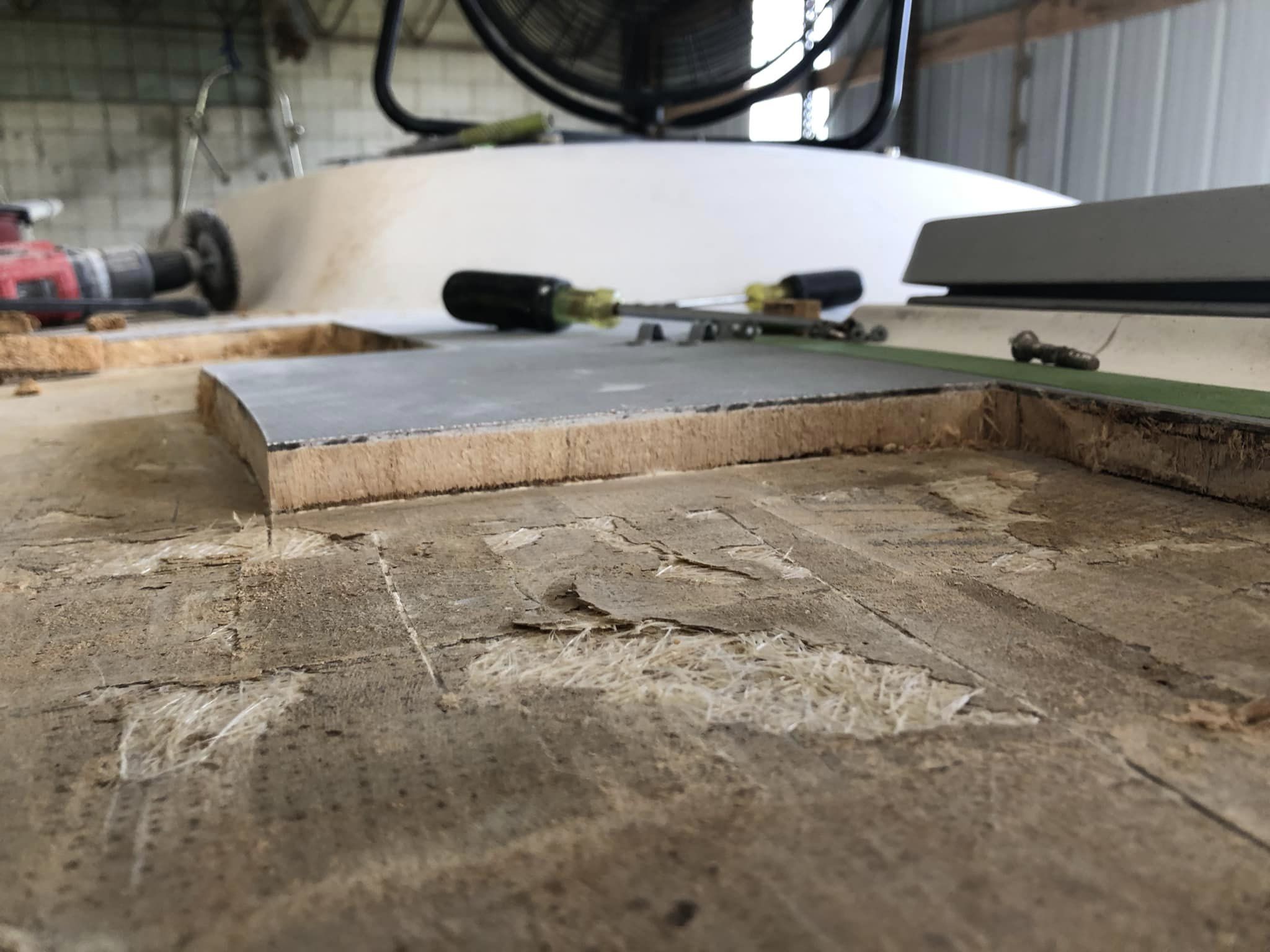
6. Con. Of course older boats are not without their own problems. Many older boats may have hidden structural issues. The most common are soft decks because of rotted coring. Although this is repairable, it is labor intensive and takes many hours of hard work. Other issues can be problems with cored hulls, poor hull/deck joints, as well as problems with the keel. Additionally, water damage from deck leaks can do some serious damage to interior components and woodwork. All of this is repairable, but can take a lot of time and expense. The best way to avoid these types of problems is to have a good surveyor inspect the boat prior to purchase.
A few final thoughts
With prices down and some smart shopping, you can find some older boats where the seller has already done many upgrades, such as newer paint jobs, repaired structural problems, and replaced engines. The boat I am now living on had a replacement engine with less than 300 hours on it when we bought it. Granted, there were many other upgrades needed, but the cost of the engine alone was a good part of what we paid for the boat. Over the years, I have surveyed many boats where the owner had made many upgrades only to have to sell the boat due to health or other reasons. Some of these boats were great deals for the buyers.
Insurance. This can become an issue for older boats that are not in great shape. These days almost all marinas require insurance, while at the same time many insurance companies are not writing policies for boats older than 20-30 years. Almost all insurance companies will require a clean survey before even thinking about writing a policy. If you are thinking of a fixer-upper, this can be a problem. It is possible to get a liability-only policy, but not all marinas will accept this type of coverage. Liability only will not cover what was paid for the boat, along with what has been invested in it.
Clearly, there are many pros and cons to buying an older sailboat; each person must decide what is best for them. Do not just listen to those who say, “it is not worth it” or those that say, “it is the only way to go.” Skill levels for doing repair work and financial situation along with timing all can affect the decision of buying an older used boat. If you are serious about purchasing any boat, a good survey will help keep you out of trouble, and you are likely to need it for insurance, so it’s best to get a professional inspection prior to writing the big check.
Please let me know if you have questions in the comments section; this way, everyone can join the discussion and learn.