
Keels are not something most sailors give much thought to until the water gets skinny, or the keel falls off. Let’s face it, most of us never give a second thought to doing any maintenance to our keels, oh sure if there is a big crack where the keel meets the hull we want to fill it so it looks better, but do any of us really pay much attention to our keels beyond that?
As a surveyor, I have seen the good, the bad, and the ugly when it comes to keels. From what I have seen, what surprises me most is that more keels do not end up falling off. Although most keels do not require a lot in the way of maintenance, there are some important things to consider for your keel.
There are basically two types of keels found on most modern sailboats. Integral and bolt-on. Integral keels are molded as part of the hull structure, with ballast being placed inside the hull, and bolt-on keels where a cast metal keel is bolted onto the bottom of the hull using large bolts or threaded rods. Of course, there are also boats with centerboards and dagger boards but for now, I am going to focus on the more common fixed keels.
In the early days of fiberglass, designers and builders often copied wooden boat designs. Keels were mostly an integral part of the hull, keeping the weight low and adding little to the vessel’s performance. Builders mostly molded the full keel shape in fiberglass and added the ballast to the inside of the keel rather than bolting it on after the hull was built, as was done with wooden boats. This was done to speed up construction and reduce costs. Small shops could avoid the expense of having a keel cast in the shape needed. Instead, they could buy cheap scrap lead or iron shot and simply fill the keel from the inside using resin to bind all the small scraps together. They would then glass over the top of the ballast to finish.
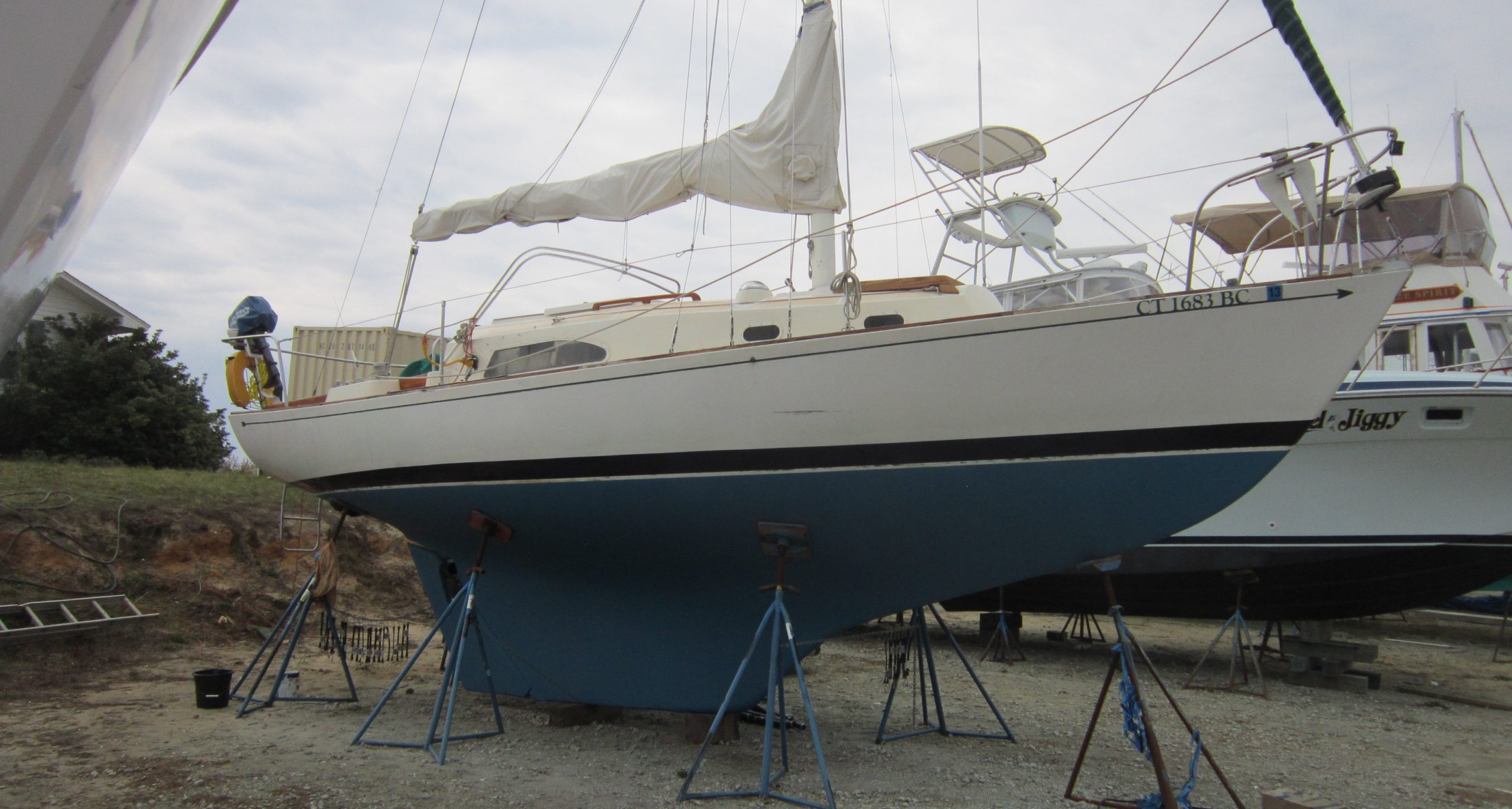
These poured integral keels proved to be very effective and long-lasting, assuming they were done correctly. Some builders, really cutting corners, used steel and concrete to save money. The better builders had lead cast to fit the inside of the keel cavity; once set in place, resin was used to fill voids between the fiberglass and lead and bond the lead to the fiberglass. As with the poured keels, the top was finished with fiberglass to seal everything.
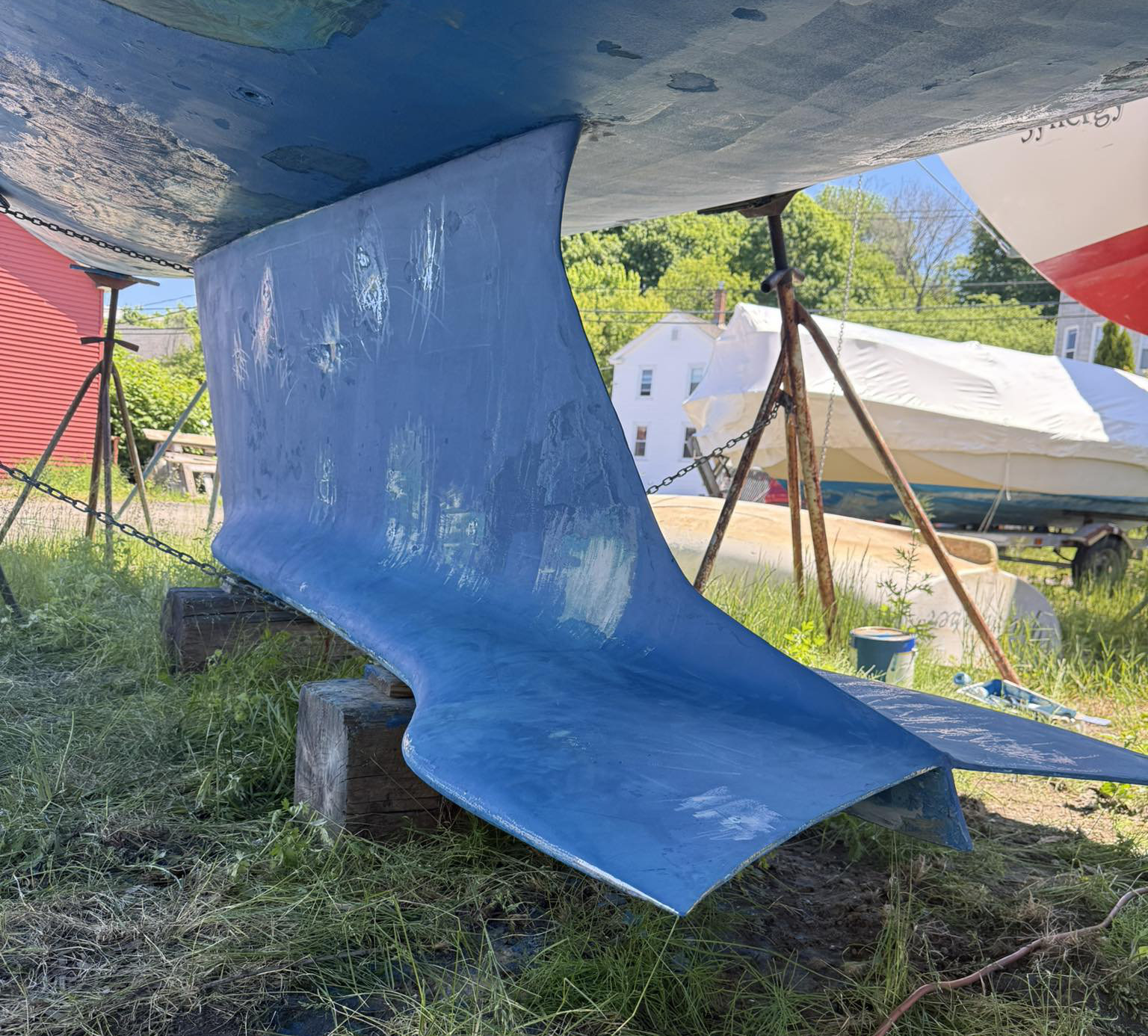
As designers started to really understand fluid dynamics, they found they could have better control of keel shapes by casting the keels separate from the hull and bolting them on. This really came into play with racing boats. Bolt-on keels allowed designers to change keel shapes to improve performance or adjust draft. Builders could use a single hull design and change the keel shape and depth as needed. A single hull mold could produce a boat with a 7-foot draft or one with a 4-foot draft simply by using a different keel.
All this sounds good, but as the years have passed, we now find that not all these solutions are without problems. Although most sailors give little thought to their keels, there are some valid reasons to pay closer attention to our keels.
Let’s start with the problems found with many encapsulated keels. For the most part, this method of construction was good, offering a solid keel that remained problem-free for many years. Keels of this type usually only give trouble where the builder cut corners and used poor materials or failed to fill all the voids. Some builders used steel scraps in place of lead to save money. This at first seemed expectable, as many cast keels were also made of steel.
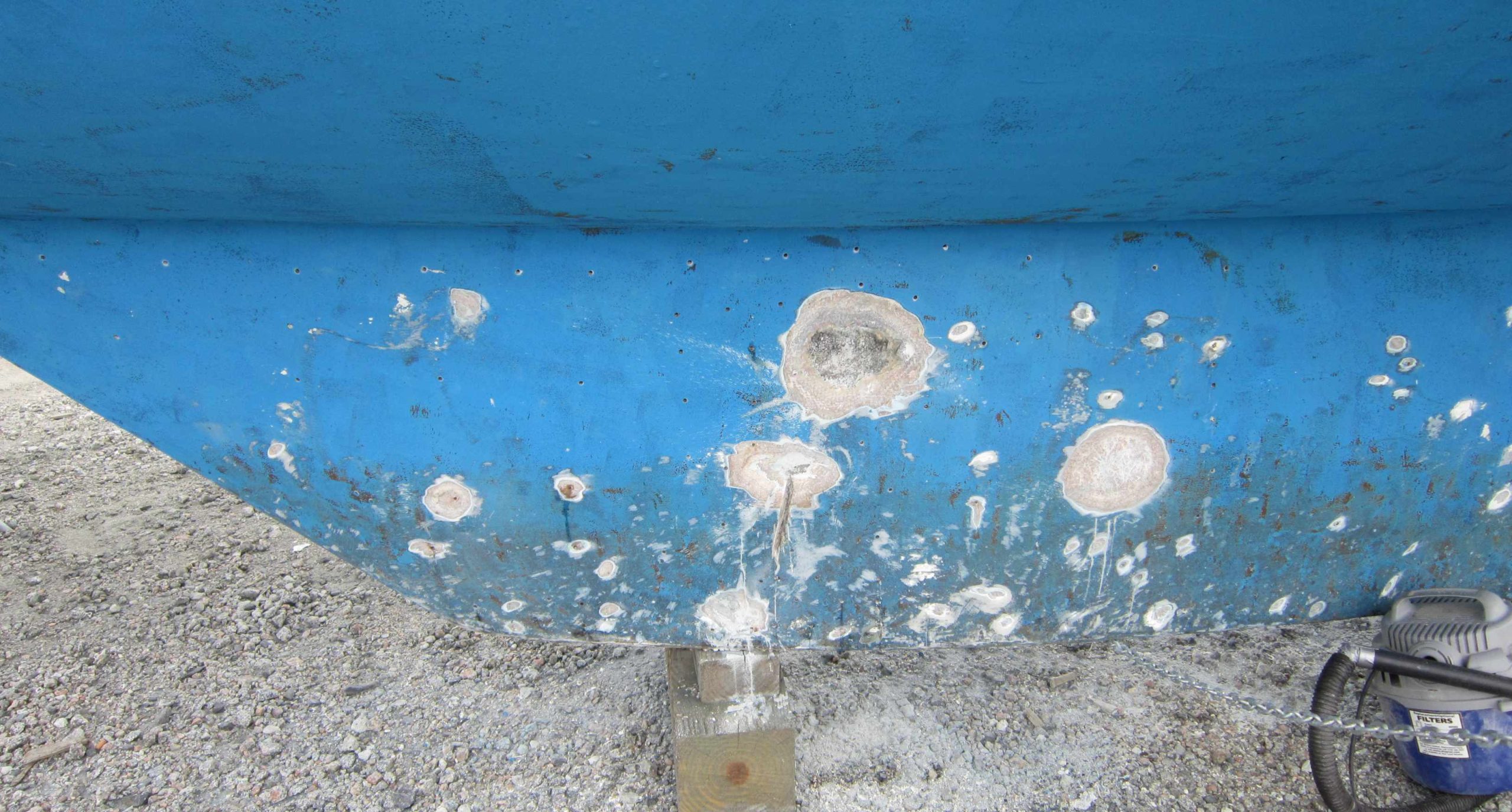
The problem arose many years later when voids allowed moisture into the keel. The steel rusted and, in doing so, expanded. This caused the outside of the keel to bulge, sometimes cracking the fiberglass. Unfortunately, there is no easy fix to this other than to remove the steel from inside the keel cavity, a dirty, labor-intensive job. Once removed, the steel had to be replaced with lead, adding to the cost. With many older boats, this was simply not worth the expense.
Even using lead was not without its problems, as the fiberglass could delaminate from the lead, allowing voids that could fill with water. This could also cause swelling of the keel. In boats laid up for the winter in colder climates, freezing water could crack the fiberglass. Fortunately, this is easier to fix than steel, as the water could be drained from the voids and resin injected in its place. It could, however, take a long time to dry out enough to be able to inject the resin.
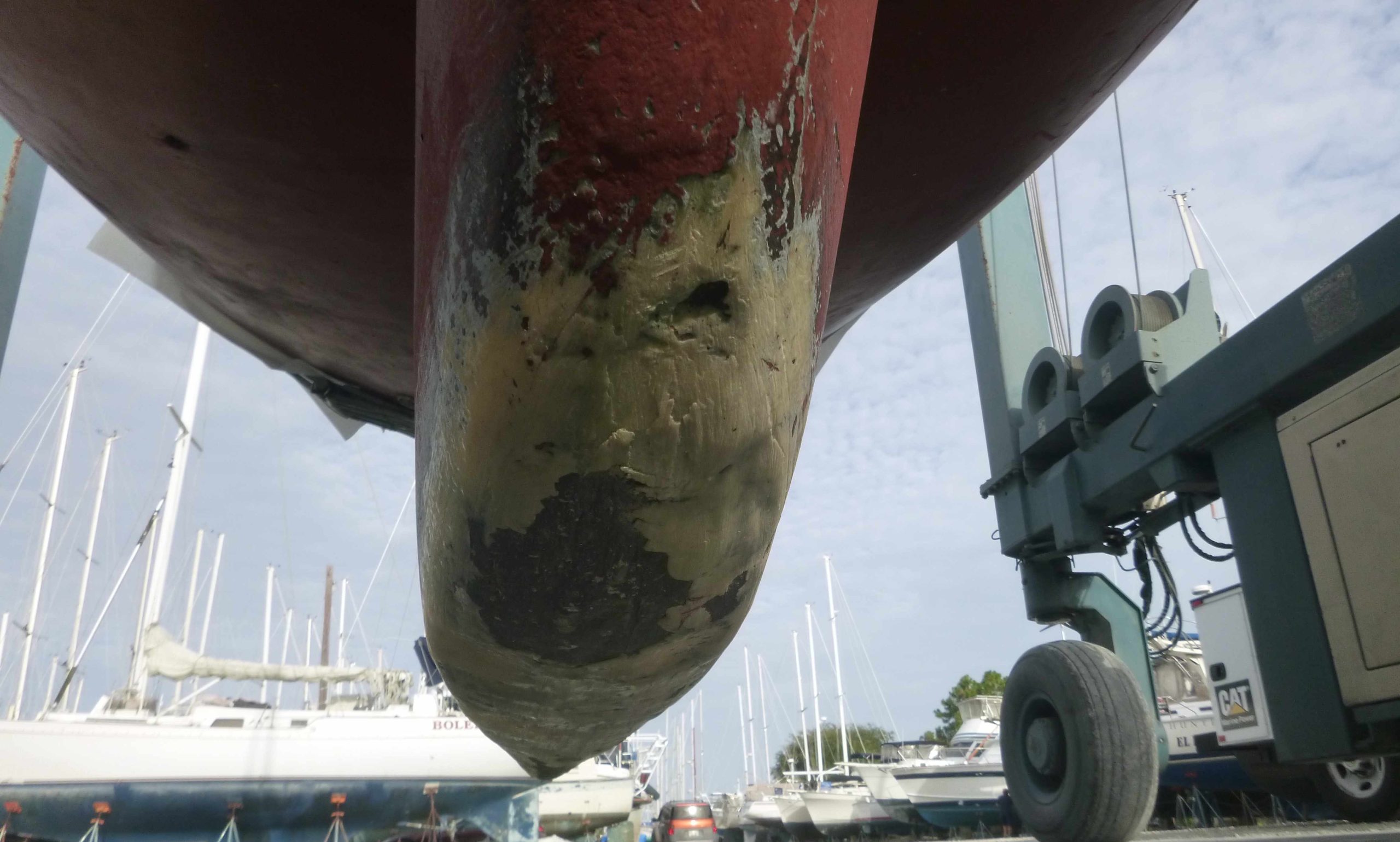
Another problem with encapsulated keels is that the bottoms of the keels are fiberglass, not the best material to withstand a hard grounding on rocks or coral. The fiberglass could be badly damaged, requiring major repairs. That said, I have never heard of the ballast falling out even with major damage to the bottom of the keel.
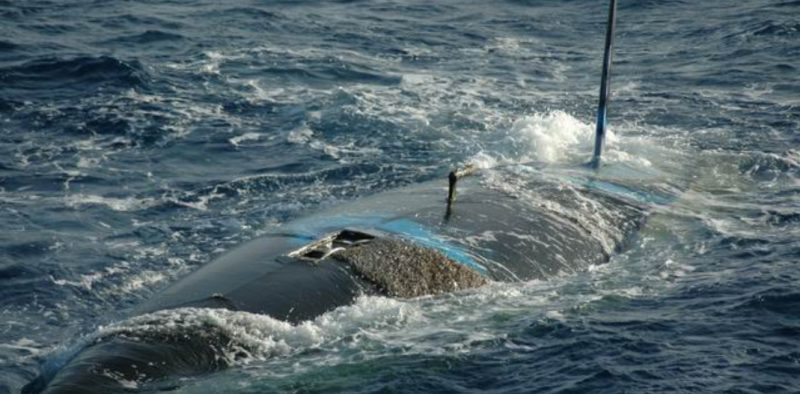
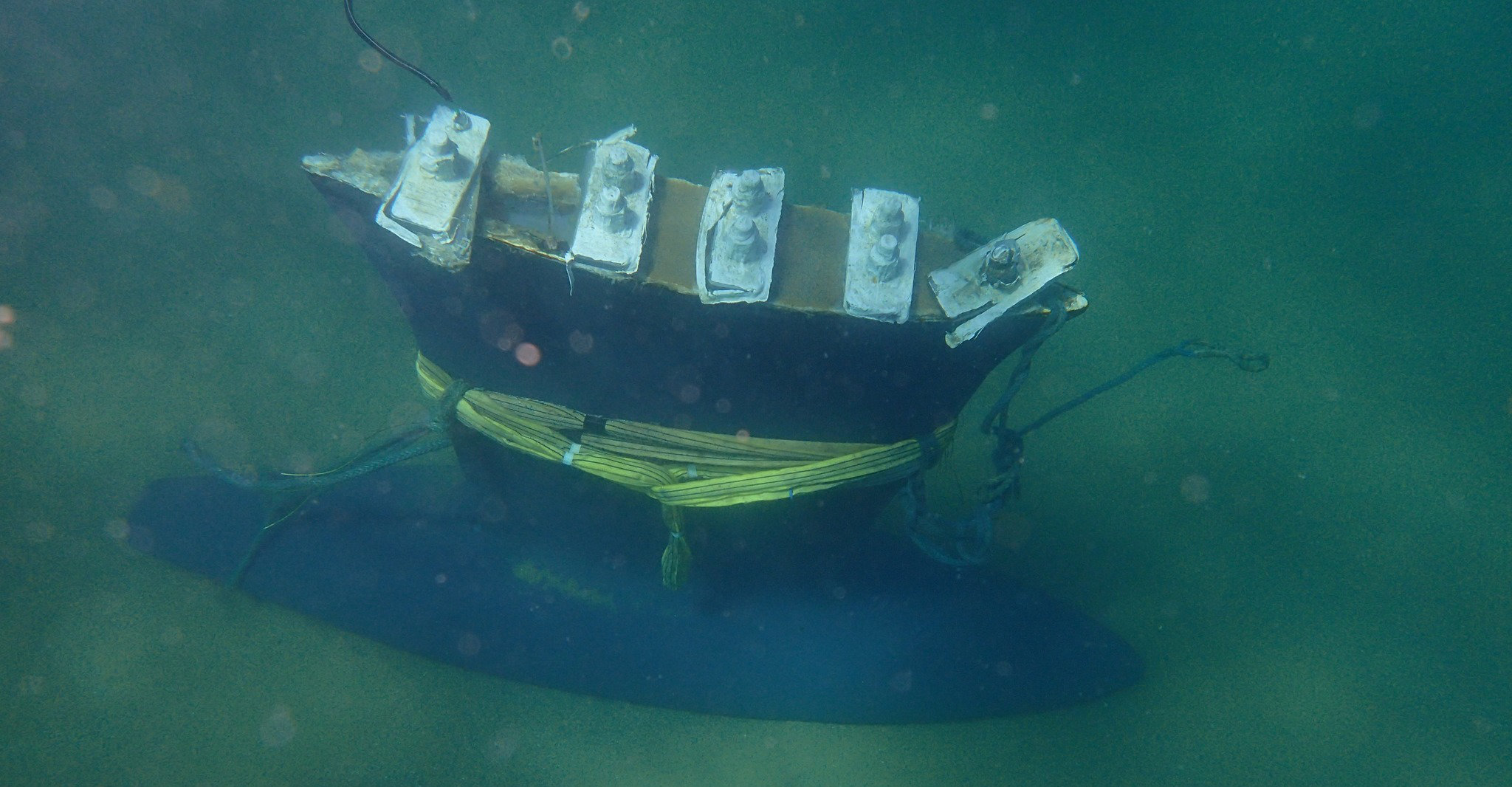
Although not perfect, encapsulated keels are generally problem-free and give many years of worry-free service. The same cannot always be said for bolt-on keels. Over the last ten to twenty years, I have been hearing and reading about many stories of boats losing their bolt on keels. I first became acutely aware of this after the loss of Cheeki Rafiki, a Beneteau First 40.7. Cheeki Rafiki lost its keel while sailing in the North Atlantic, with the loss of all four crew members. Although the crew was never located, the upturned hull of Cheeki Rafiki was. Photos clearly showed that the keel was missing. Although the hull later sank and no actual evidence of the cause of the keel failure was found, it was clear that the keel had torn loose from the hull and was missing. This story made the headlines and opened a broad discussion of keel loss and structural design.
Since then, I have reviewed many accounts and studied photos of vessels that have lost their bolt on keels. Many want to blame the keel bolts themselves, and there seems to be a consensus among the sailing community that keel bolts are the most common cause of keel failure. Having reviewed the data and firsthand accounts, I cannot agree with this assessment. From what I see in most of the photos of keel loss, particularly those where the keel has been recovered, the bolts themselves have remained intact while the structure supporting the bolts has failed. Sometimes the bolts simply pulled through the fiberglass, while in others the fiberglass surrounding the bolts failed.
The final official report for Cheeki Rafiki blamed the fiberglass support matrix as the likely cause of this loss. During the investigation, four other boats of the same model were inspected and found to have problems with the bonding of the inner liner or grid to the hull, weakening the entire structure. Not having the hull or the keel in this case makes a full evaluation nearly impossible.
Most production boats built after around 2000 use a fiberglass grid to stiffen and support the hull structure. The keel bolts will go through the hull and through the bottom pan of the grid, allowing the grid to distribute the keel loads over a larger area. It is believed that failure of the bonding of the grid to the hull, along with damage to the grid itself, can result in the bolts pulling through the grid and hull laminate.
Hard groundings are usually cited as a cause of damage to the bonding of the laminate of the hull and grid. A hard or sharp impact could flex the laminate enough to severely weaken the structure. Once the fiberglass is fractured, it no longer can support the full loads of the bolts. Even a soft grounding could cause damage to the fiberglass structure if side loading or twisting of the keel is encountered from wind and waves. Salvage efforts can also place hard loads on the keel if the boat is forcibly pulled off shallow waters. Often the boat is twisted while being pulled into deeper water, applying hard and unplanned-for loads on the keel.
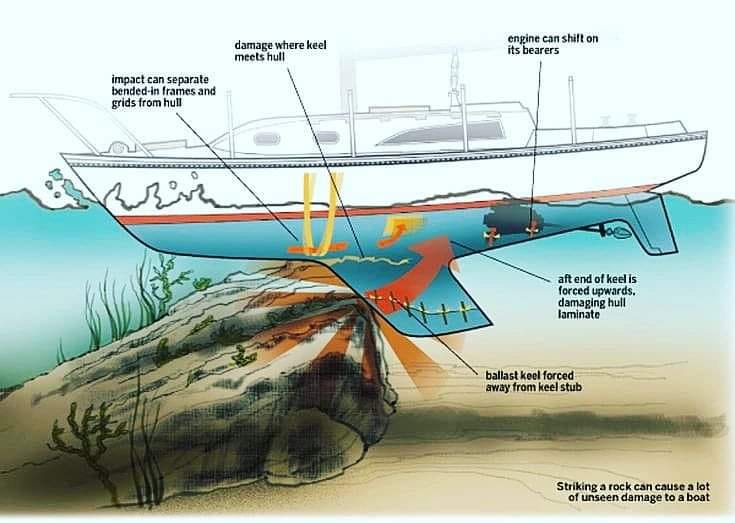
It can often be hard to tell if the keel support structure has been damaged or not. Most grid systems installed in modern boats are glued in place using a very strong methacrylate adhesive. It’s difficult to determine if the adhesive bond has failed between the grid and the hull, as access to this is almost impossible. Sometimes the grid itself is fractured, making the damage easier to spot, but this is not always the case. There may also be visible cracking or stress lines on the outside of the hull near the keel/hull interface.
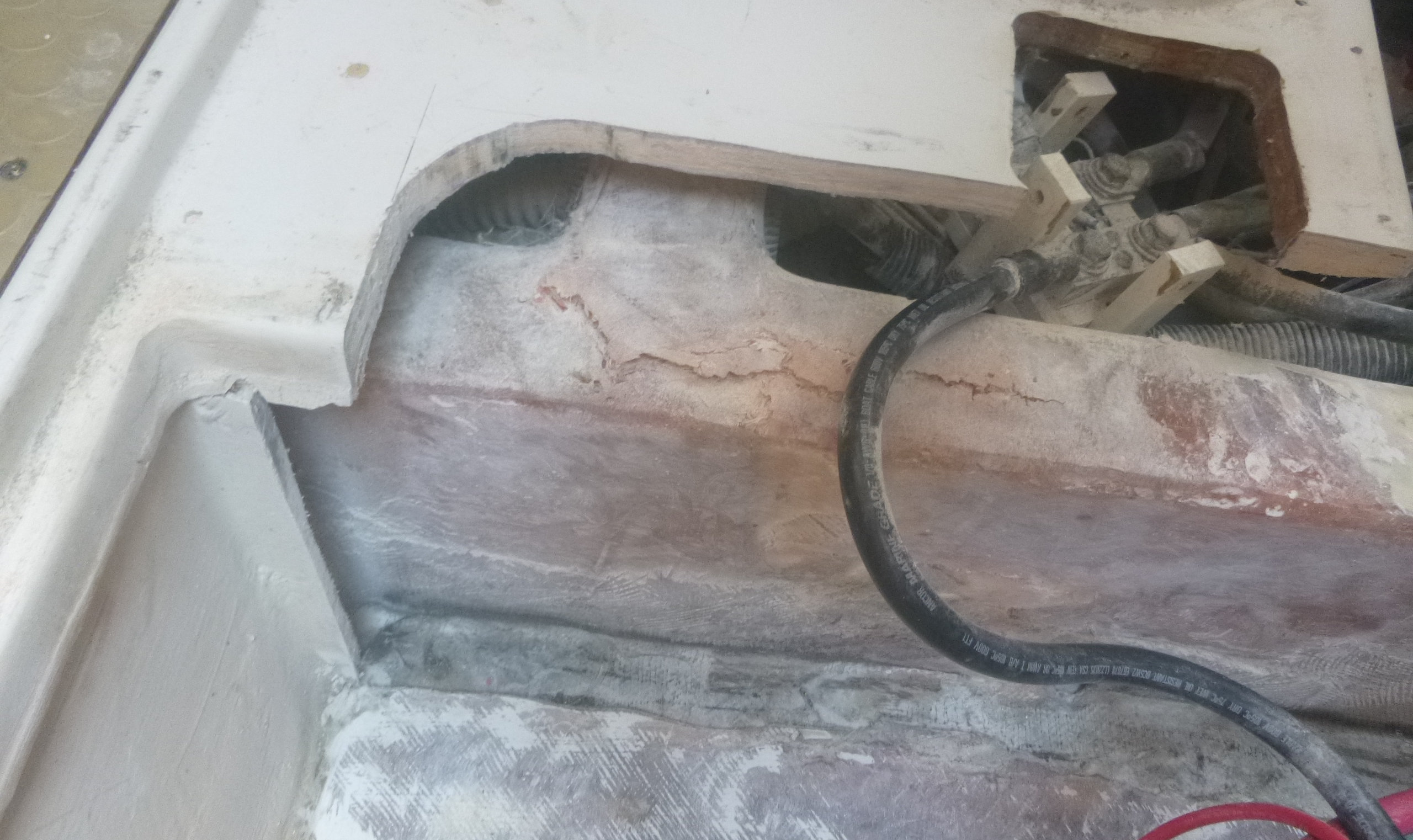
This type of damage can be very hard to repair as it is difficult to access and often under flooring, tanks, and other parts of the boat. It was noted that Cheeki Rafiki had recently been repaired after a hard grounding prior to its offshore passage. I have also heard of another boat that lost its keel shortly after repairs were completed. This illustrates how hard it can be to adequately repair this type of damage.
Keel bolts themselves can be an issue, adding to or hastening structural damage. Although I have never personally seen or heard of a boat losing its keel strictly from the keel bolts failing, I am guessing it has happened, but I could not find a single case, nor could I find anyone else who has firsthand knowledge of this, so clearly it would be an anomaly.
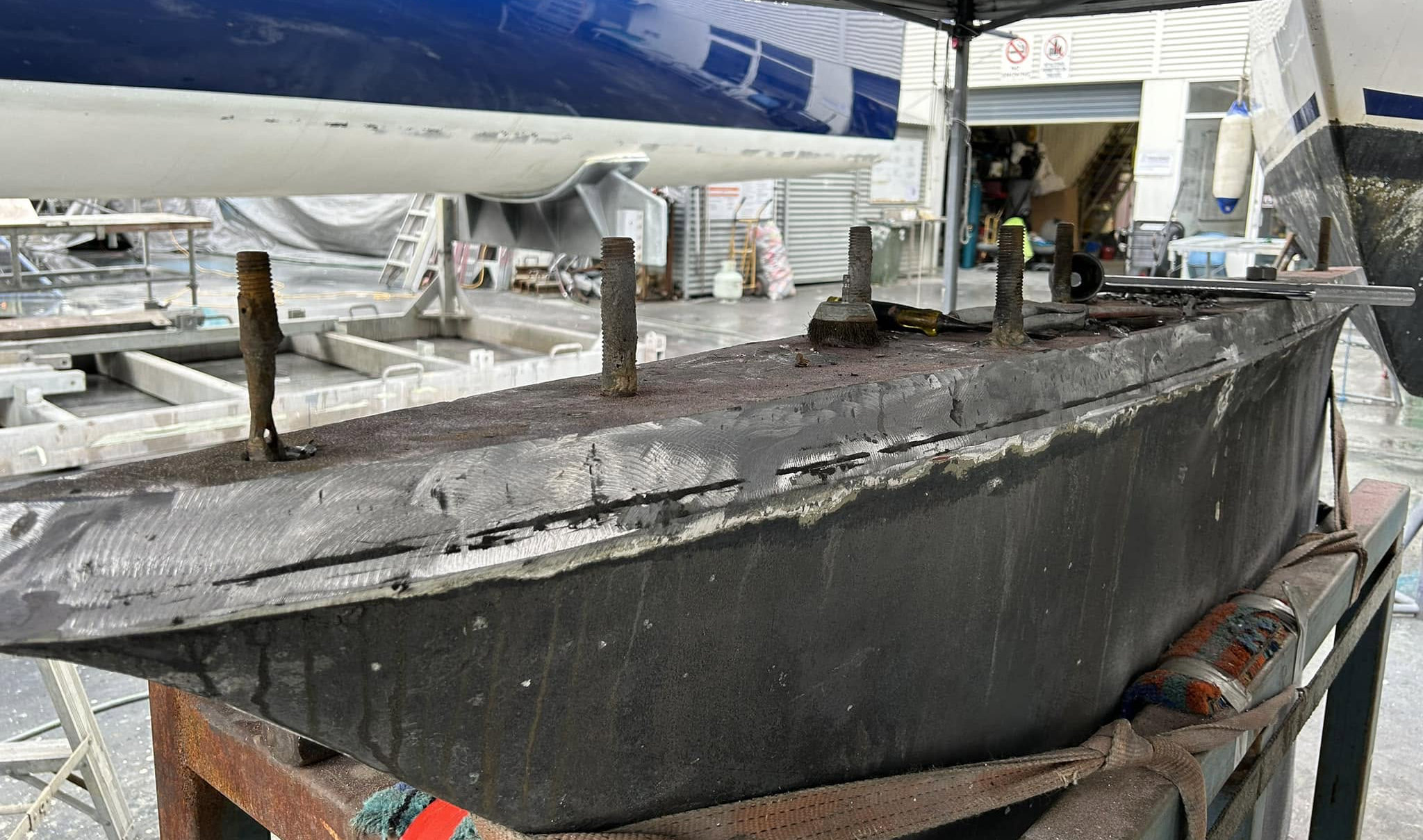
Keel bolts should, however, be inspected and maintained. They should be checked for tightness and if found loose, tightened. A loose keel will move, and this movement can damage or weaken the laminate by working back and forth over a period of time. Loose bolts can also allow water into the keel/hull joint, facilitating corrosion of the bolts. Movement of the keel can also force the sealant out of the keel/hull joint, adding to water ingress.
As a surveyor, I was always surprised when I could move the keel with just a little foot pressure on the bottom of the keel as the boat hung in the slings. This movement was easy to spot at the hull/keel joint, and often water would be pushed out of the joint as it moved. Of course, any water that gets into this joint will cause corrosion of the bolts. If a keel is found loose, it would be wise to remove the keel for a full inspection of the bolts.
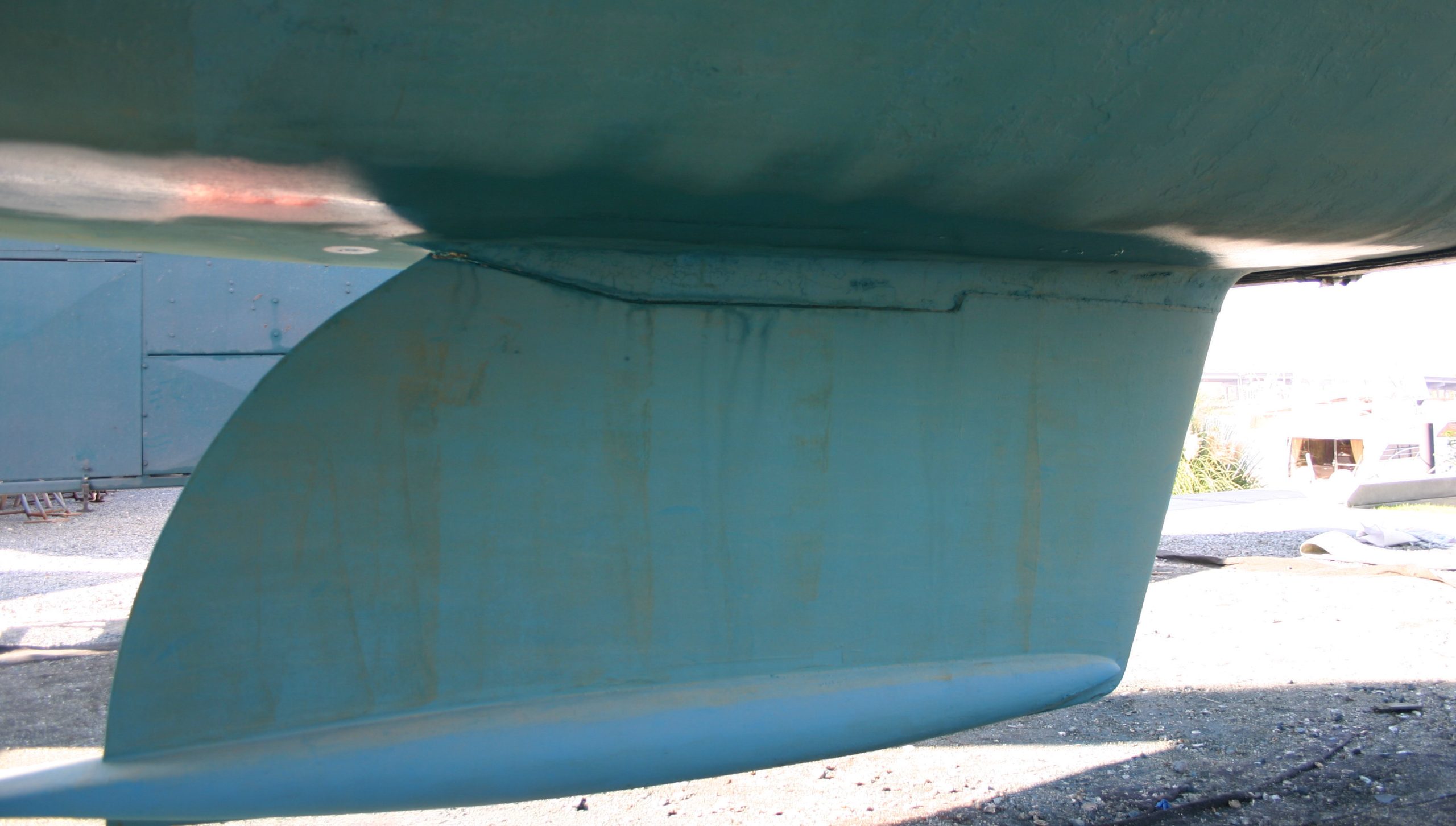
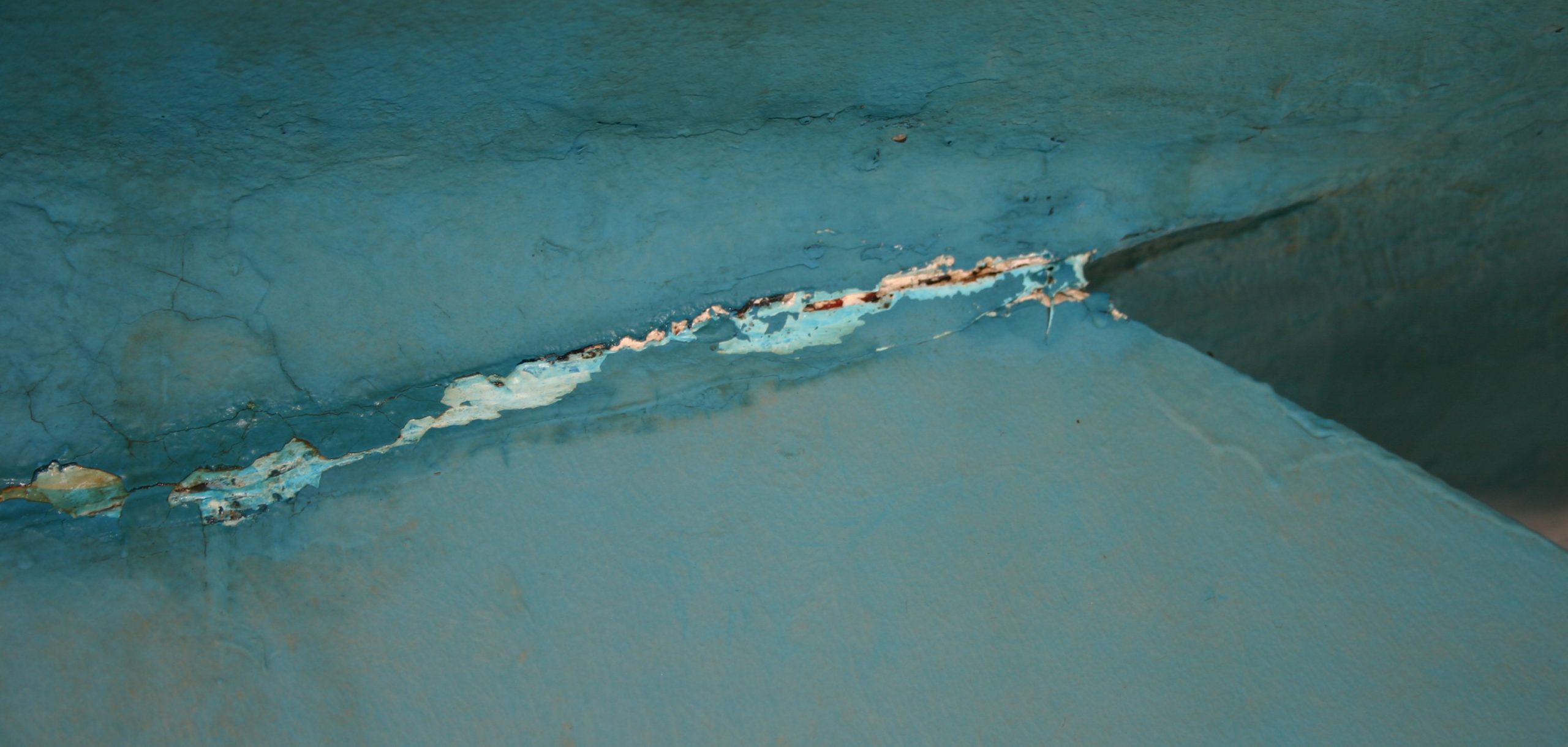
Any gap in the hull/keel joint could also indicate that the bolts need servicing. If rust is noted coming from the gap, it may be time to think about removing the keel for a better look at the condition of the bolts. Keel bolts can look fine at the heads but have severe corrosion just under the fiberglass. The only way to know for sure is to drop the keel. Cracks at the hull/keel joint do not by themselves indicate problems, but weeping rust or a gap you can slip a thin putty knife into are concerns.
If heavy corrosion is noted on the bolt heads or nuts, they should be evaluated for replacement. Stainless steel, in particular, needs to be carefully watched. Stainless steel can suffer from pitting or crevice corrosion. This type of corrosion can result in sudden, catastrophic failure. Higher grades of stainless steel will help negate this type of corrosion. Normal carbon steel will experience rusting, but it is on the surface where it can be cleaned and sealed.
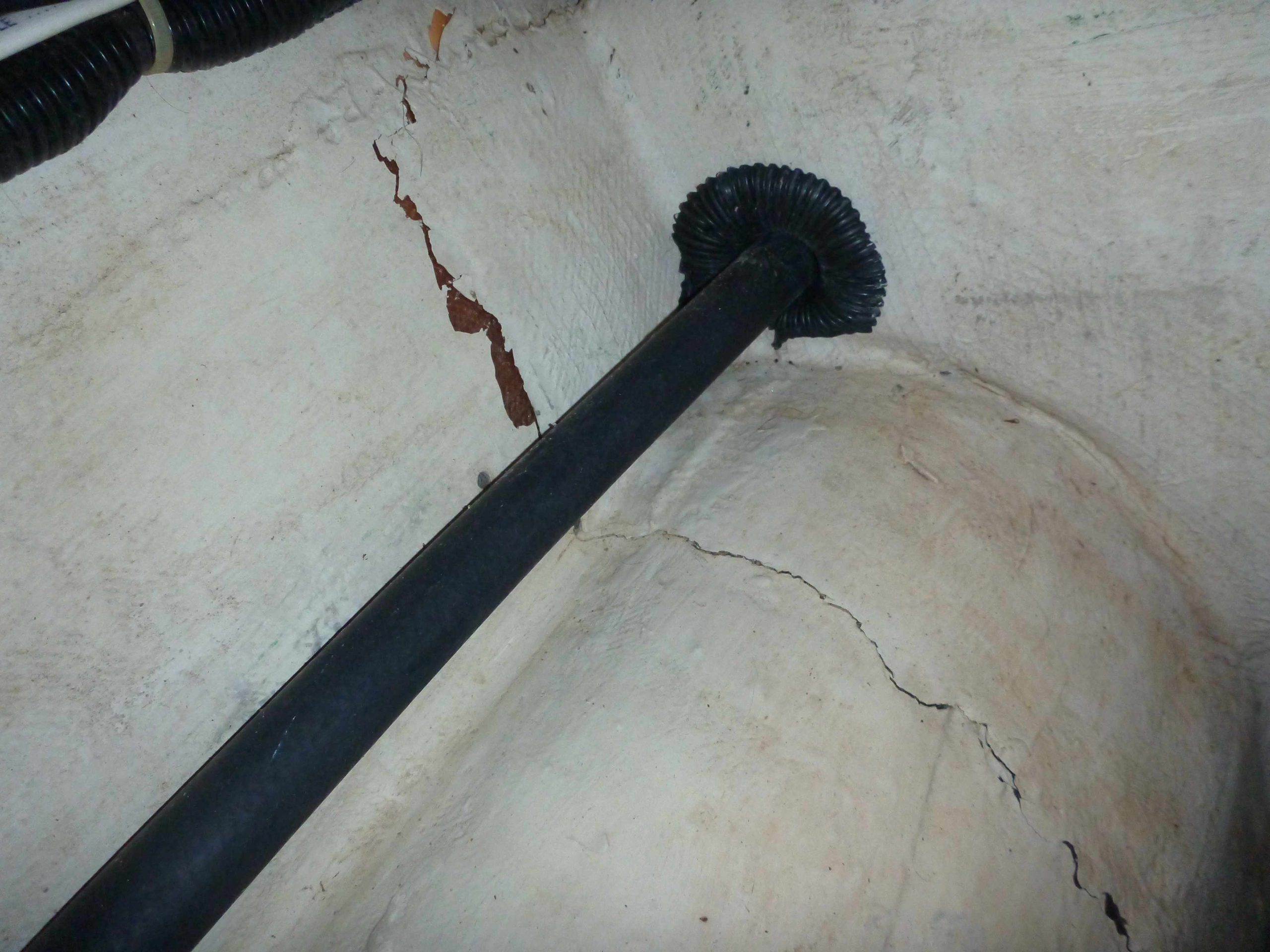
More important than inspecting the bolts alone is inspecting the surrounding fiberglass support structure. Even if the vessel has had no notable groundings, the support structure should be examined carefully at least annually. Normal sailing and hauling out can place a lot of stress on the fiberglass structure as well, creating potential problems if not caught early. We all like to think our boats are well built; however, construction flaws happen. Careful inspections can spot these early before more serious problems occur.
Visually inspect for cracks between the grid structure and the inside of the hull, particularly near the keel bolts. Pay attention to any cracks along the edges of secondary bonds, as this could indicate failure of the bond. Look for cracks in the grid near the bolts, pay close attention to the corners, as this is where the stresses are greatest. If you have any doubts, have a professional do an inspection.
Bolt-on keels can give many years of good service but they can also fail suddenly, sometimes with disastrous results. Keeping an eye out for clues to potential problems will ensure you do not have problems. Pay attention to any leaks noted around the heads of the keel bolts; this is a major warning sign of potential problems.
For the most part keels, bolt-on or integral, do not just suddenly give problems; most issues take years to fully develop. A few careful observations during routine maintenance will help keep you aware of any potential issues before they can become serious problems.
Please let me know if you have questions in the comments section; this way, everyone can join the discussion and learn.